When securing heavy cargo for ocean shipping, road transportation, rail transport, or export packaging, steel strapping has traditionally been one of the most widely used options.
It is strong, familiar, and suitable for many demanding applications.
However, heavy-duty cargo securing is not simply a question of choosing the strongest material. Cargo can settle, compress, vibrate, and experience repeated dynamic forces during transportation. The strap, buckle, tension, packaging, and cargo itself all need to work together as a complete restraint system.
This is where polyester composite strapping has become an increasingly important alternative to conventional steel strapping.
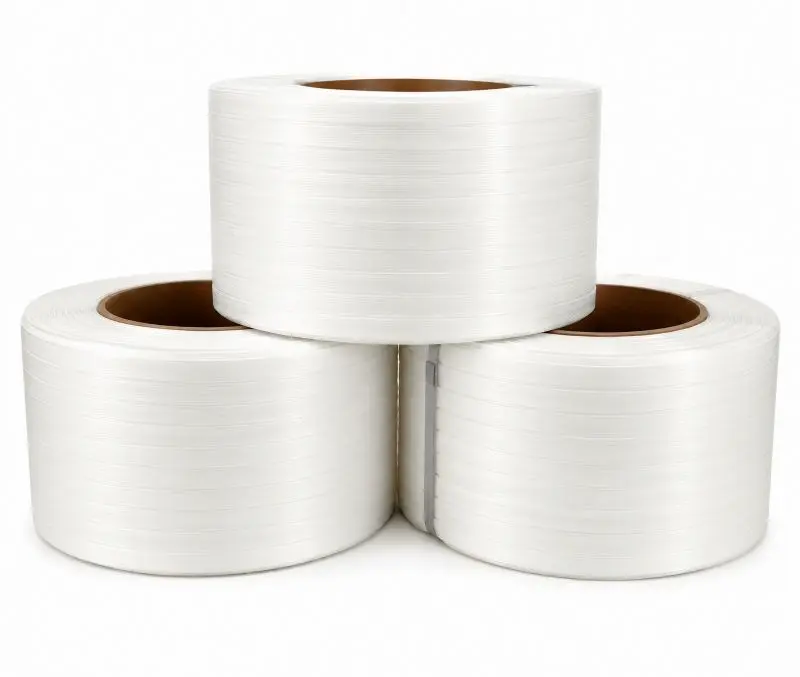
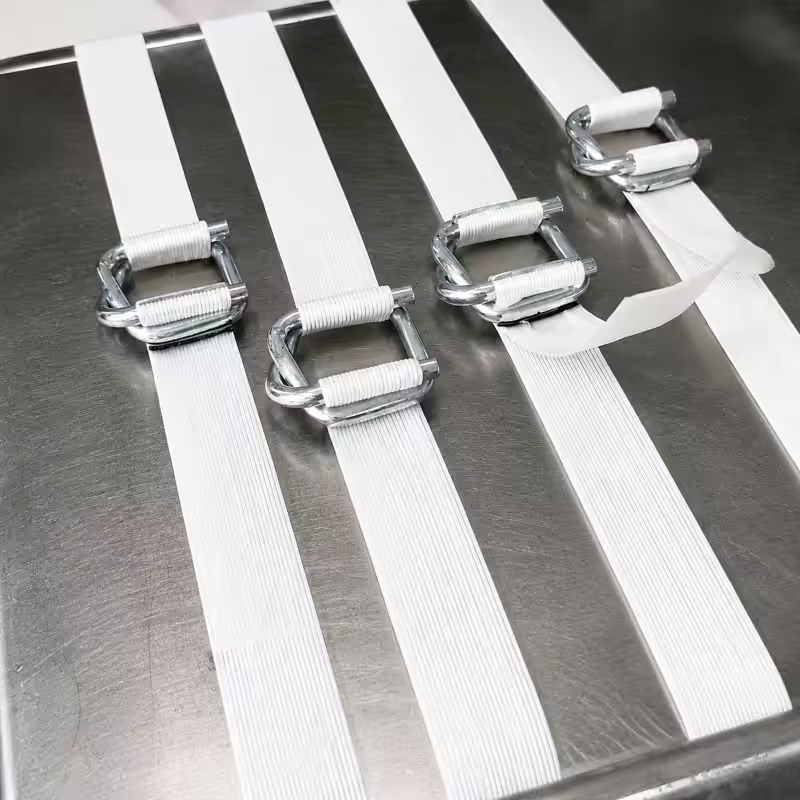
Composite strapping combines high-tenacity polyester yarns with a protective polymer coating. When used with the appropriate wire buckle and tensioning tool, it provides a flexible cargo securing system that is lightweight, corrosion-resistant, easy to handle, and suitable for many industrial and export applications.
So, composite strapping vs. steel strapping: which one is better?
The answer depends on the cargo, transportation conditions, required restraint strength, application method, and the overall securing system.
This guide explains the key differences and helps you determine when composite strapping may be the better choice for your cargo.
Why Is the Choice of Strapping Material Important?
Cargo does not remain completely static during transportation.
During ocean, rail, and road transportation, cargo can be exposed to:
Longitudinal acceleration and braking forces
Lateral movement and vibration
Vertical movement and impact
Cargo settlement
Packaging compression
Changes in friction between cargo and the supporting surface
Temperature and humidity changes
The IMO notes that improper stowage and securing can create serious safety risks during transportation and handling. The CTU Code provides practical guidance for packing and securing cargo in containers and other intermodal transport units.
Therefore, selecting a cargo strap should not be based only on its nominal breaking strength.
A suitable system should consider: Cargo, Packaging, Friction, Strap, Buckle, Tension, Lashing Geometry, Anchor Points.
A strong strap used incorrectly can still result in an unstable load.
How Does Cargo Behavior Affect Steel and Composite Strapping?
One of the major differences between steel and polyester-based strapping is how the material behaves when the cargo changes during transportation.
Cargo Settlement and Compression
Many types of cargo can settle after packing.
For example:
Timber bundles may compress or change dimensions.
Cartons may settle under vibration.
Palletized goods may experience small changes in package height.
Flexible packaging can deform under load.
Blocking materials may compress over time.
If the cargo becomes smaller after the strap has been tensioned, the restraint system can lose some of its original tension.
This is an important consideration when selecting a securing material.
Elasticity and Tension Retention
Polyester has greater elongation and elastic recovery than steel. This allows composite strapping to accommodate some movement and settlement of the cargo rather than behaving as a completely rigid band.
However, this should not be interpreted as meaning that composite strapping automatically maintains the same tension throughout an entire voyage.
Actual performance depends on:
Strap specification
Initial tension
Cargo characteristics
Temperature
Friction
Buckle performance
Lashing configuration
Amount of cargo movement
The correct principle is therefore: Use the material characteristics together with a properly designed securing system.
4 Key Differences Between Composite Strapping and Steel Strapping
1. Material Flexibility and Dynamic Cargo Movement
Steel strapping is a rigid metallic restraint material with relatively low elongation.
Polyester composite strapping has significantly greater elongation and recovery characteristics.
This difference can be useful when cargo experiences repeated vibration or minor settlement during transportation.
Composite strapping can accommodate limited dimensional changes while continuing to provide restraint.
This is particularly relevant for:
Timber products
Building materials
Machinery
Metal products
Palletized cargo
Export cargo exposed to long-distance transportation
However, the strap should never be expected to compensate for poor packing or excessive voids. Cargo should first be properly positioned, blocked, braced, or otherwise restrained.
2. Worker Handling and Safety
Steel strapping can have sharp edges, and cutting a tensioned steel strap can release stored energy suddenly.
This creates handling risks during:
Application
Cutting
Unpacking
Reworking
Maintenance
Cargo inspection
Composite strapping does not have the same sharp metallic edges and is generally easier to handle manually.
This can be particularly useful for warehouses where operators frequently apply and remove cargo securing materials.
However, operators should still follow proper tensioning, cutting, and handling procedures.
Safety depends on the complete application method, not simply on the material itself.
3. Corrosion and Cargo Surface Protection
Steel is susceptible to corrosion when exposed to moisture, condensation, salt air, or other corrosive environments, depending on its coating and storage conditions.
This can be a concern when securing:
Painted products
Aluminum profiles
Machinery
Architectural products
Finished metal components
Export cargo stored in humid environments
Composite strapping does not rust because its load-bearing structure is polyester rather than steel.
It can therefore be advantageous in applications where corrosion or rust staining is a concern.
The protective coating also helps separate the polyester fibers from the cargo surface.
Nevertheless, appropriate edge protection should still be used when straps contact sharp or abrasive cargo edges.
4. Weight and Handling Efficiency
Composite strapping is significantly lighter than equivalent steel strapping systems.
A lighter coil can make manual handling easier and reduce the physical effort required to transport strapping around a warehouse or loading area.
This is especially useful when:
Operators move between multiple loading locations.
Strapping is applied manually.
Cargo is secured inside containers.
The application area has limited lifting equipment.
A high number of straps are used every day.
For companies that apply large quantities of cargo securing materials, handling efficiency can become an important part of the total operating cost.
Composite Strapping vs. Steel Strapping: Technical Comparison
| Performance Property | Polyester Composite Strapping | Steel Strapping |
| Main Material | High-tenacity polyester yarn plus polymer coating | Steel |
| Flexibility | Flexible with elastic recovery | Relatively rigid |
| Shock and Vibration Response | Can accommodate certain dynamic movement | Less tolerant of repeated deformation |
| Corrosion | Does not rust | Can corrode depending on grade and coating |
| Edge Characteristics | Non-metallic outer surface | Sharp metallic edges possible |
| Cargo Surface | Generally less abrasive | Can damage surfaces if poorly protected |
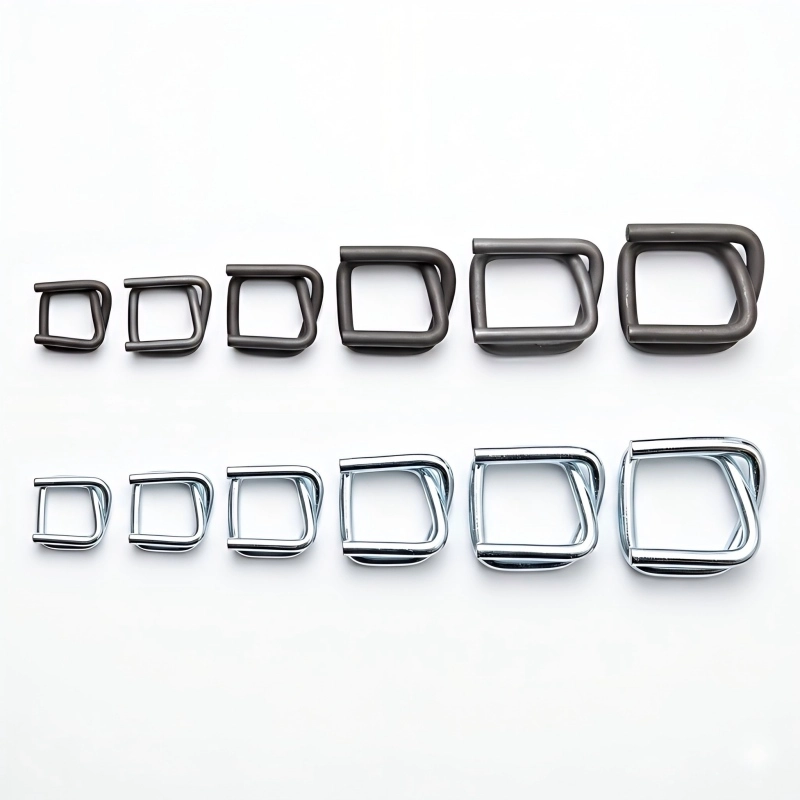
| Joint Method | Wire buckle | Seal, notch, or other metal joint |
| Re-tensioning | Possible with suitable buckle and system | Generally not practical after jointing |
| Handling Weight | Lightweight | Heavier |
| Manual Application | Relatively simple | Usually requires heavier tooling |
| Outdoor and Marine Storage | Good resistance specification dependent | Corrosion protection may be required |
| Typical Applications | Cargo securing, bundling, export packaging, industrial loads | Heavy industrial bundling and applications requiring rigid steel banding |
The comparison should always be made using the complete securing system, rather than the strap material alone.
A composite strap paired with an unsuitable buckle, for example, cannot deliver the performance expected from a properly matched system.
What Is Polyester Composite Strapping?
Polyester composite strapping is a type of non-metallic cargo securing material manufactured from high-tenacity polyester yarns embedded in a polymer coating.
The polyester yarns provide the tensile strength, while the outer coating protects the yarn structure and gives the strap its characteristic handling properties.
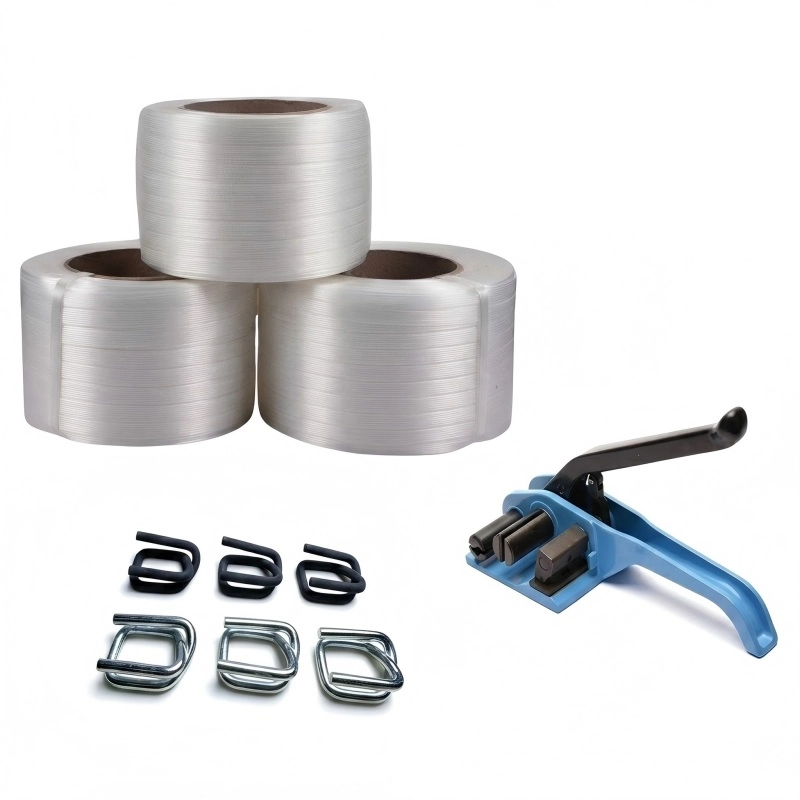
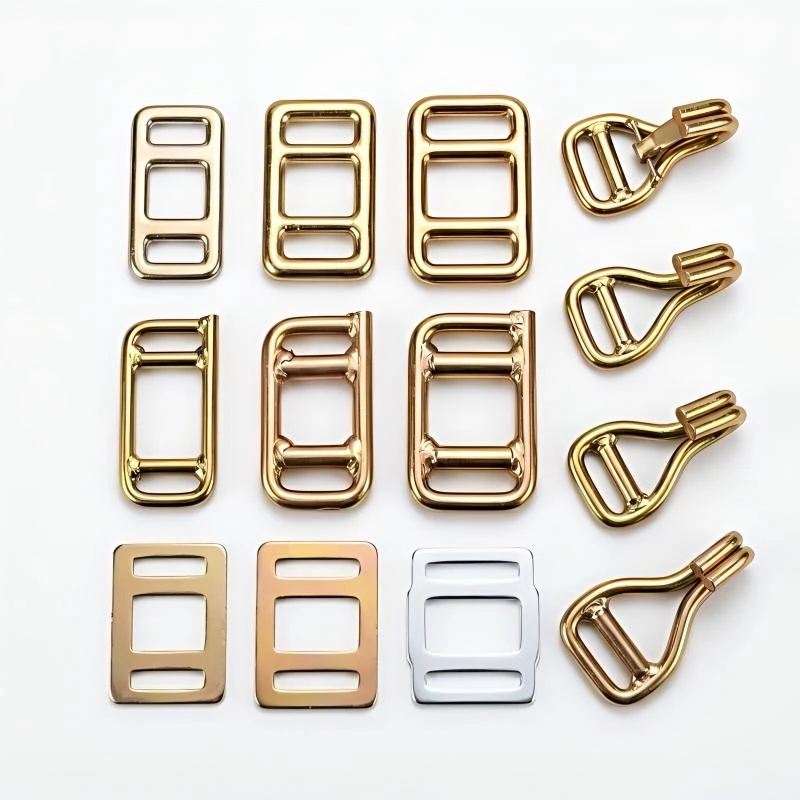
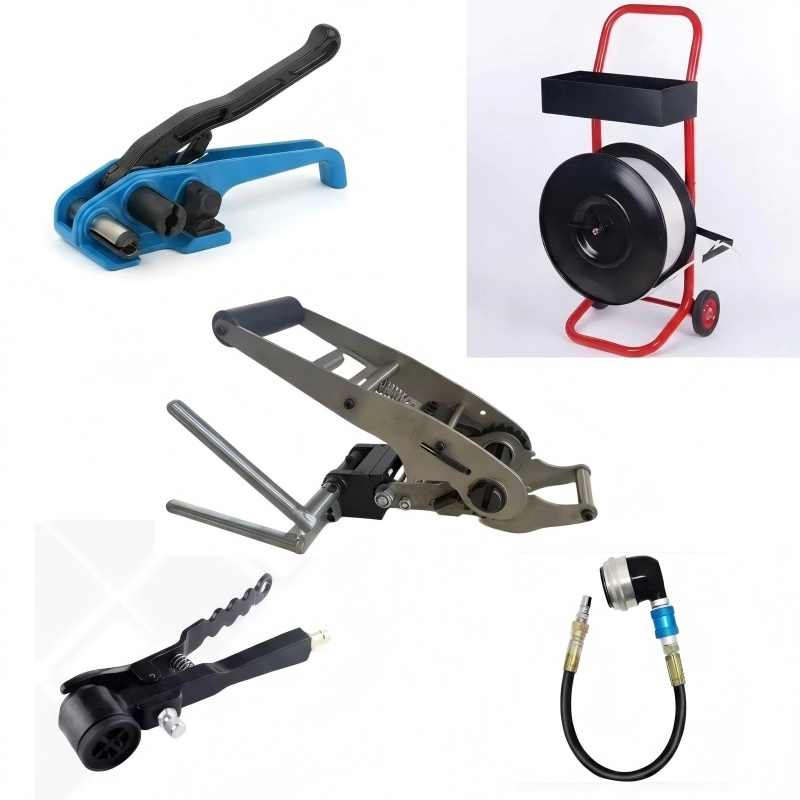
A typical composite strapping system consists of:
The strap and buckle should be selected as a matched system.
This is why simply comparing the breaking strength printed on two straps may give a misleading result.
Composite Strapping vs. Woven Strapping vs. PET Strapping
Composite strapping is not the only synthetic strapping option.
Depending on the application, buyers may also consider woven polyester lashing and PET strapping.
Composite Strapping
Composite strapping consists of polyester yarns protected by a polymer coating.
Its main characteristics include:
Good tensile strength
Relatively high stiffness compared with woven webbing
Easy feeding around and underneath cargo
Wire buckle jointing
Good resistance to moisture and corrosion
Suitable for manual cargo securing
It is particularly useful for general industrial cargo securing and export packaging.
Woven Polyester Strapping
Woven polyester strapping is constructed from woven polyester fibers rather than a coated composite structure.
It is softer and more flexible than composite strapping.
This makes it useful for:
Heavy cargo
Irregular-shaped cargo
Machinery
Steel products
Timber
Industrial equipment
Applications requiring flexible lashing
For heavier cargo or more demanding lashing configurations, woven lashing can sometimes be a better choice than conventional composite strapping.
PET Strapping
PET strapping is a rigid thermoplastic polyester strap commonly used for unitizing and bundling products.
It is widely used for:
Palletized products
Bricks
Tiles
Timber
Industrial bundles
Automated packaging lines
PET is particularly suitable where high-speed automatic strapping and heat-welded joints are important.
Composite strapping is generally more focused on manual cargo securing applications using wire buckles and tensioning tools.
Which Type of Strapping Should You Choose?
There is no single strap that is ideal for every application.
A practical selection approach is:
| Application | Commonly Considered Solution |
| Cartons and light palletized cargo | 13 to 16 mm Composite Strapping |
| General industrial pallet securing | 16 to 19 mm Composite Strapping |
| Timber and building materials | 19 mm Composite or Woven Strapping |
| Metal products and machinery | 25 mm Composite or Woven Lashing |
| Heavy industrial cargo | 25 to 32 mm Composite or Woven Lashing |
| Irregular heavy cargo | Woven Lashing |
| High-speed automated packaging | PET Strapping |
| Applications requiring rigid steel banding | Steel Strapping |
This table is a starting point rather than a universal engineering rule.
The final selection should consider cargo weight, dimensions, center of gravity, friction, securing points, transport mode, and the required restraint arrangement.
Tensipack Composite Strapping Specification Matrix
Tensipack offers composite strapping in multiple widths and strength levels for different cargo securing applications.
The following product specifications are based on the current Tensipack product range:
| Item Code | Width | Linear Strength | System Strength | Coil Length | Recommended Buckle |
| TS-CS-40L | 13 mm | 200 daN | 320 daN | 1,100 m | 13 mm wire buckle |
| TS-CS-40 | 13 mm | 300 daN | 480 daN | 1,100 m | 13 mm wire buckle |
| TS-CS-50L | 16 mm | 285 daN | 460 daN | 850 m | 16 mm wire buckle |
| TS-CS-50 | 16 mm | 425 daN | 680 daN | 850 m | 16 mm wire buckle |
| TS-CS-60 | 19 mm | 475 daN | 760 daN | 600 m | 19 mm wire buckle |
| TS-CS-65 | 19 mm | 625 daN | 1,000 daN | 500 m | 19 mm wire buckle |
| TS-CS-85 | 25 mm | 785 daN | 1,260 daN | 500 m | 25 mm wire buckle |
| TS-CS-86 | 25 mm | 925 daN | 1,490 daN | 450 m | 25 mm wire buckle |
| TS-CS-105 | 32 mm | 1,500 daN | 2,400 daN | 300 m | 32 mm heavy-duty wire buckle |
System strength depends on the complete strap-and-buckle system and should be verified using the applicable test method and matched buckle.
1 daN is approximately equal to 1.02 kgf and 10 N.
Do not use system-strength figures as a universal indication of how much cargo weight a strap can secure. Cargo restraint requirements depend on the complete securing arrangement and transportation conditions.
How to Select the Right Composite Strapping
The correct strap should not be selected based on cargo weight alone.
Several factors should be considered:
1. Cargo Weight
Heavier cargo generally requires a higher-capacity restraint system.
However, cargo weight by itself does not determine the required strap strength.
For example, a low-profile heavy machine and a tall palletized load may behave very differently during transportation.
2. Cargo Dimensions and Center of Gravity
Cargo height and center of gravity can significantly influence stability.
Tall cargo may require additional lateral restraint even when its total weight is relatively moderate.
Before selecting the strap, consider:
Cargo height
Cargo width
Cargo length
Center of gravity
Load distribution
Potential movement direction
3. Friction Between Cargo and Supporting Surface
Friction plays an important role in cargo restraint.
A cargo unit with high friction against the container floor behaves differently from a smooth metal package or machinery mounted on a low-friction surface.
Therefore, the securing system should consider both friction resistance and mechanical restraint, rather than relying on either one alone.
4. Lashing Geometry
The number of straps is not the only factor.
The angle, direction, attachment position, and effective restraint path all influence the resulting securing force.
For this reason, it is not appropriate to say that a particular cargo always requires two straps or four straps.
The securing arrangement should be evaluated according to the actual cargo and application.
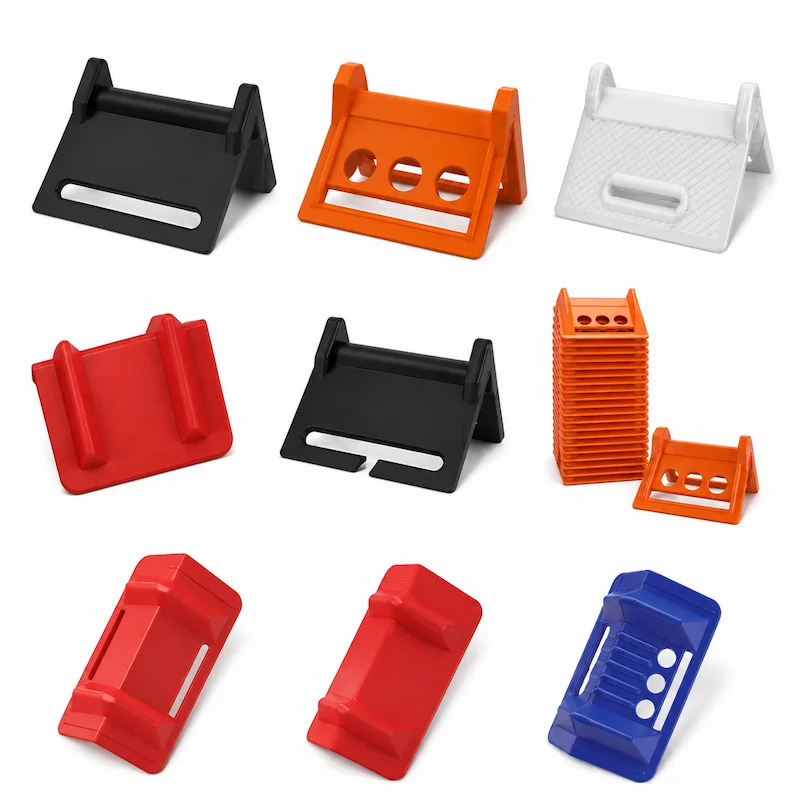
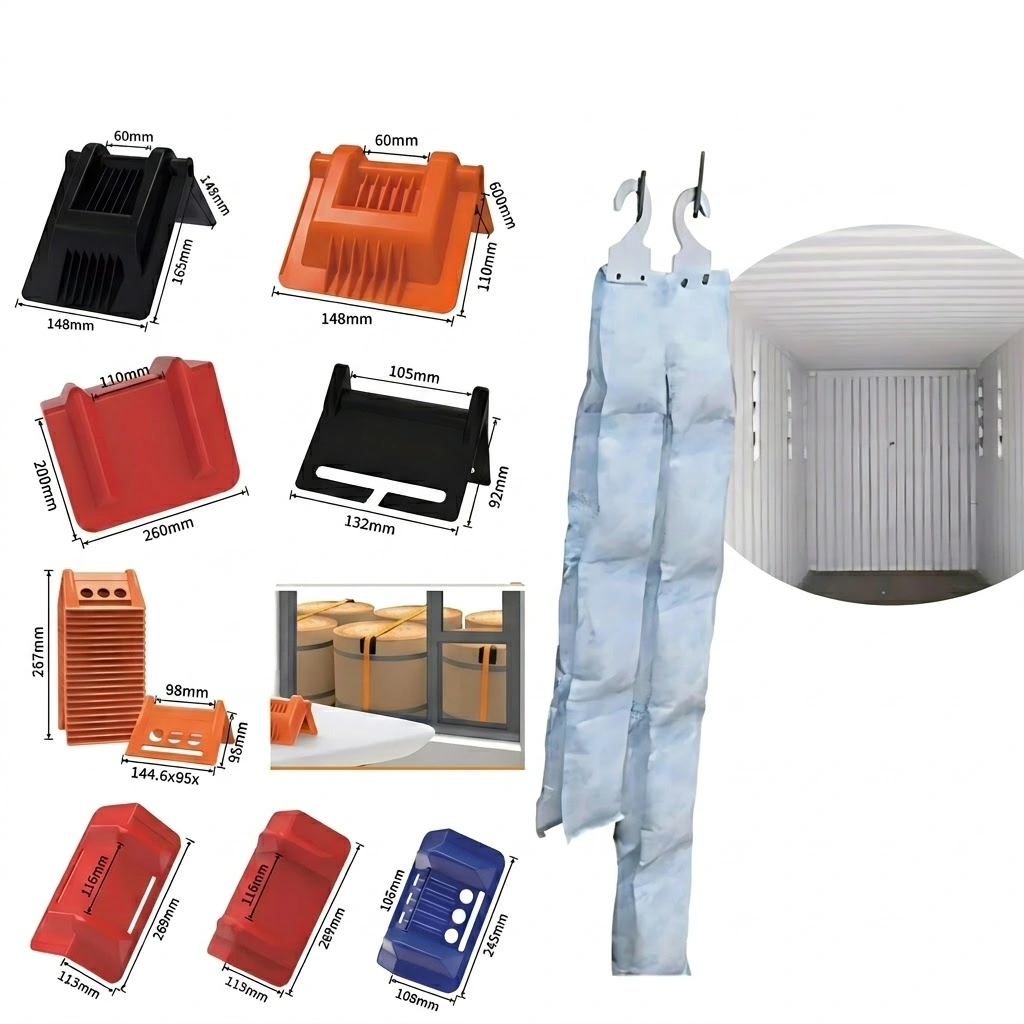
5. Edge Protection
Even though composite strapping is less abrasive than steel, sharp cargo edges can still damage synthetic straps.
Edge protectors can help:
Prevent localized cutting
Distribute pressure
Protect the cargo surface
Improve strap stability
Reduce damage caused by sharp edges
For steel products, glass, machinery, timber, and other sharp-edged cargo, edge protection should be considered as part of the complete system.
Typical Applications for Tensipack Composite Strapping
Timber and Wood Products
Composite strapping can be used for:
Sawn timber
Wooden boards
Construction materials
Palletized wood products
Export timber bundles
The flexibility of polyester can be useful when the cargo experiences minor settlement during transportation.
Metal Products
Composite strapping can be considered for:
Steel tubes
Aluminum profiles
Metal sheets
Industrial components
Fabricated metal products
When the cargo has finished or coated surfaces, the non-metallic strap surface can help reduce direct metal-to-metal contact.
Sharp edges should always be protected appropriately.
Machinery and Industrial Equipment
For machinery and industrial equipment, composite strapping can be used together with:
Timber blocking
Dunnage
Edge protectors
Woven lashing
Container lashing systems
The correct combination depends on the cargo dimensions, weight, center of gravity, and available securing points.
Containerized Export Cargo
Composite strapping is particularly relevant for export packaging and container loading.
It can be used to secure:
Palletized cargo
Bundled materials
Machinery
Timber products
Industrial components
Mixed cargo units
For container transport, however, composite strapping should be regarded as one component of the cargo securing system, rather than a replacement for proper blocking, bracing, friction management, or other restraint methods.
How to Apply Composite Strapping Correctly
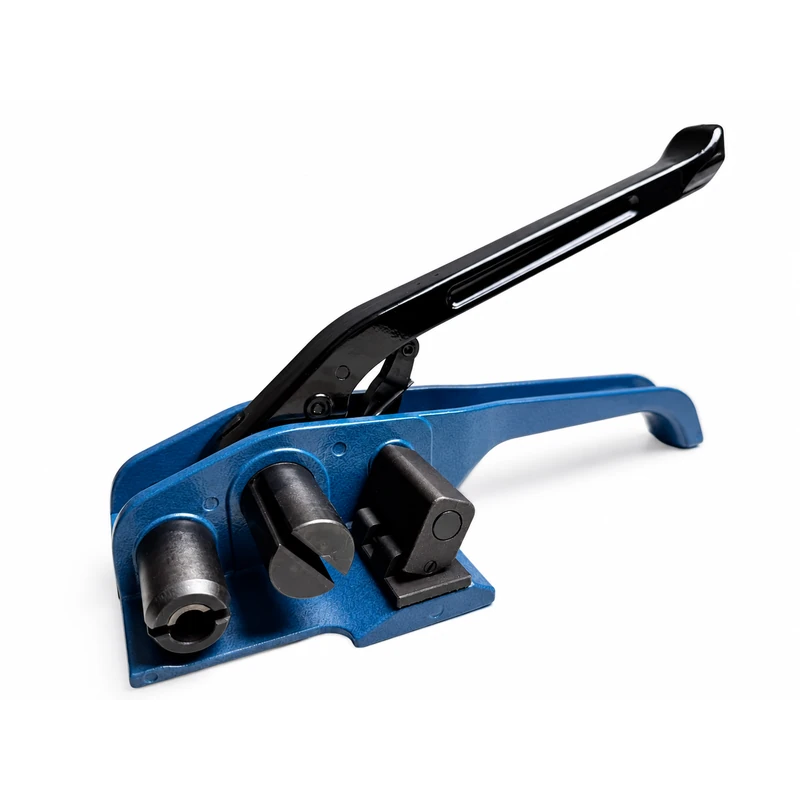
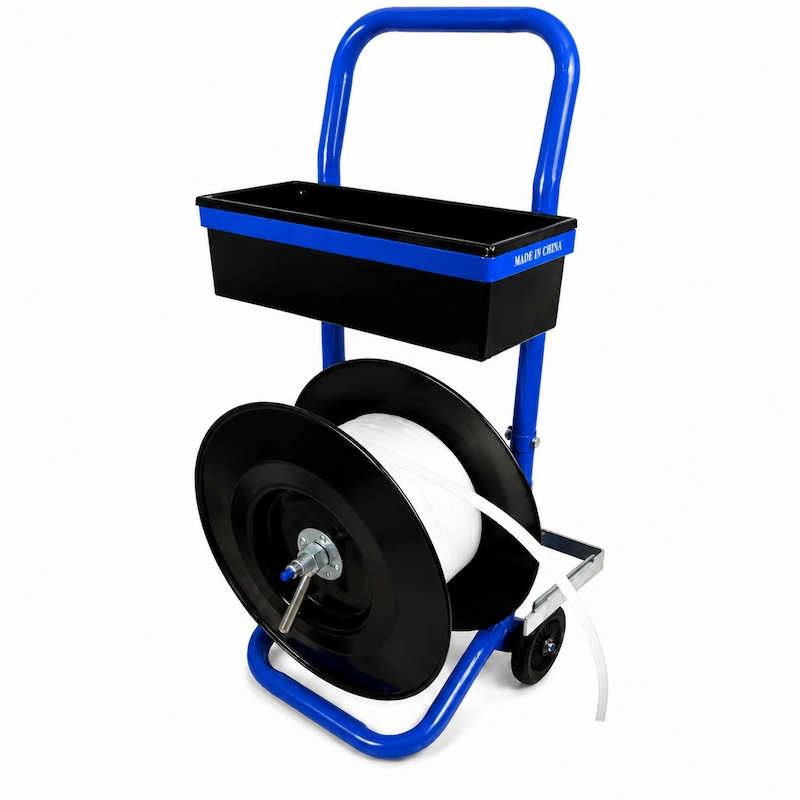
A typical composite strapping system consists of a strap, wire buckle, and tensioning tool.
Step 1: Position the Strap
Place the strap around the cargo according to the planned securing arrangement.
Make sure the strap does not run directly over sharp edges without appropriate protection.
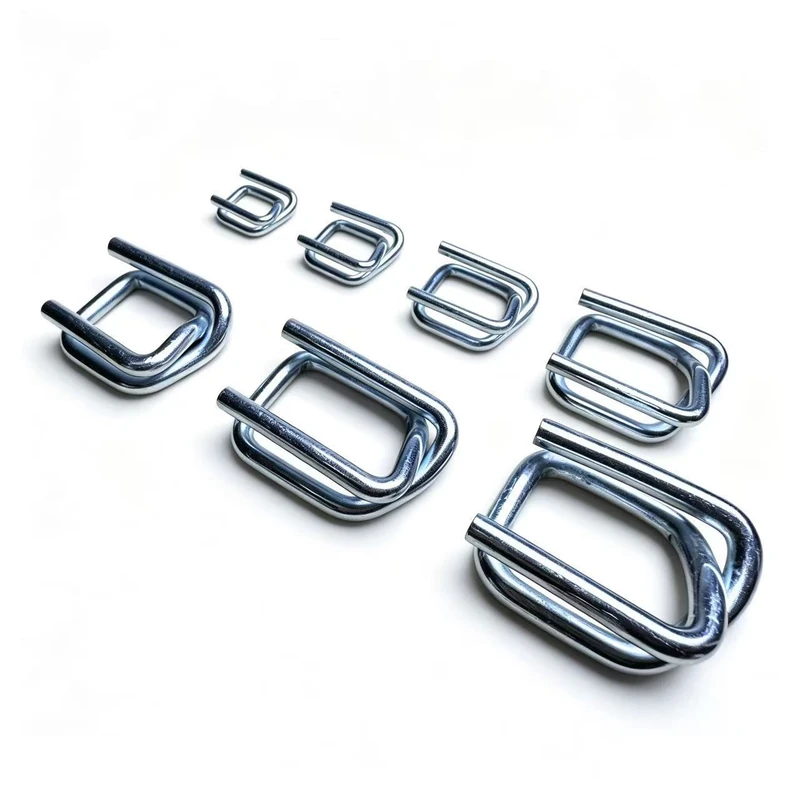
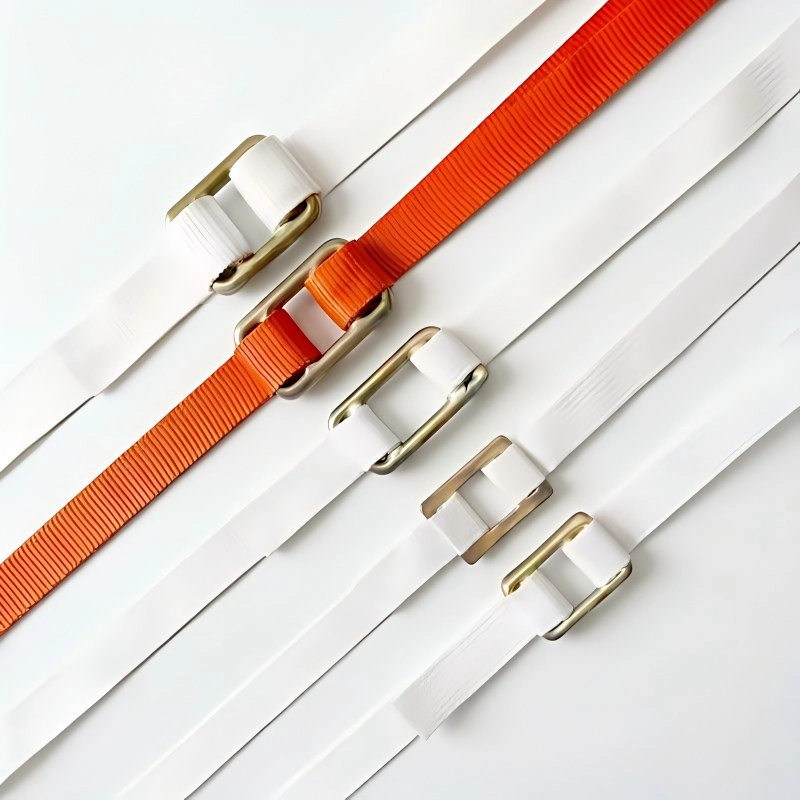
Step 2: Install the Wire Buckle
Thread the composite strap through the appropriate wire buckle according to the buckle manufacturer instructions.
The buckle must be compatible with:
Strap width
Strap construction
Strap strength
Required joint performance
Step 3: Apply Tension
Use the appropriate tensioner to apply the required tension.
Avoid excessive tension.
Too little tension may result in insufficient restraint, while excessive tension can damage:
Cartons
Timber
Packaging
Product surfaces
Strap or buckle
The correct tension depends on the cargo and securing design.
Step 4: Check the Joint
After tensioning, inspect the buckle and strap.
Check for:
Correct buckle engagement
Strap alignment
Damaged yarns
Excessive strap deformation
Sharp cargo edges
Proper edge protection
A securing system should be inspected before the cargo leaves the loading area.
Step 5: Re-Tension When Appropriate
One practical advantage of wire-buckle composite strapping is that certain systems can be re-tensioned when cargo settles.
This can be useful during:
Long warehouse storage
Pre-shipment inspection
Cargo consolidation
Multi-stage transportation
Whether re-tensioning is possible depends on the specific buckle and application.
Composite Strapping and the CTU Code
The IMO/ILO/UNECE CTU Code provides guidance on the safe packing and securing of cargo transport units.
Importantly, the CTU Code is a non-mandatory global code of practice, and it does not function as a product approval system for a specific material or brand.
Therefore, it is better to say that the cargo securing system is designed with reference to CTU Code principles, rather than claiming a composite strap is CTU Code approved.
The actual securing arrangement still needs to be appropriate for the cargo and transportation conditions.
Composite Strapping vs. Steel Strapping: Which One Should You Choose?
The decision depends on the application.
Choose composite strapping when you value:
Lightweight handling
Corrosion resistance
Flexible cargo restraint
Easy manual application
Re-tensioning capability
Reduced risk of sharp metal edges
Protection of cargo surfaces
Compatibility with wire buckles
Consider steel strapping when:
The application specifically requires steel banding.
High-temperature conditions exceed the practical limits of synthetic materials.
Existing packaging equipment is designed specifically for steel.
Industry or customer specifications require steel.
The engineering design specifically calls for steel.
For many modern cargo securing applications, however, composite strapping provides a practical alternative to steel.
Composite Strapping Is Not Always the Only Solution
One of the most important points in cargo securing is that no single product solves every cargo restraint problem.
Depending on the cargo, a complete securing solution may combine several products.
For example, composite strapping, wire buckles, and edge protectors may be suitable for bundled industrial products.
Woven lashing, buckles, and timber blocking may be more appropriate for heavy machinery.
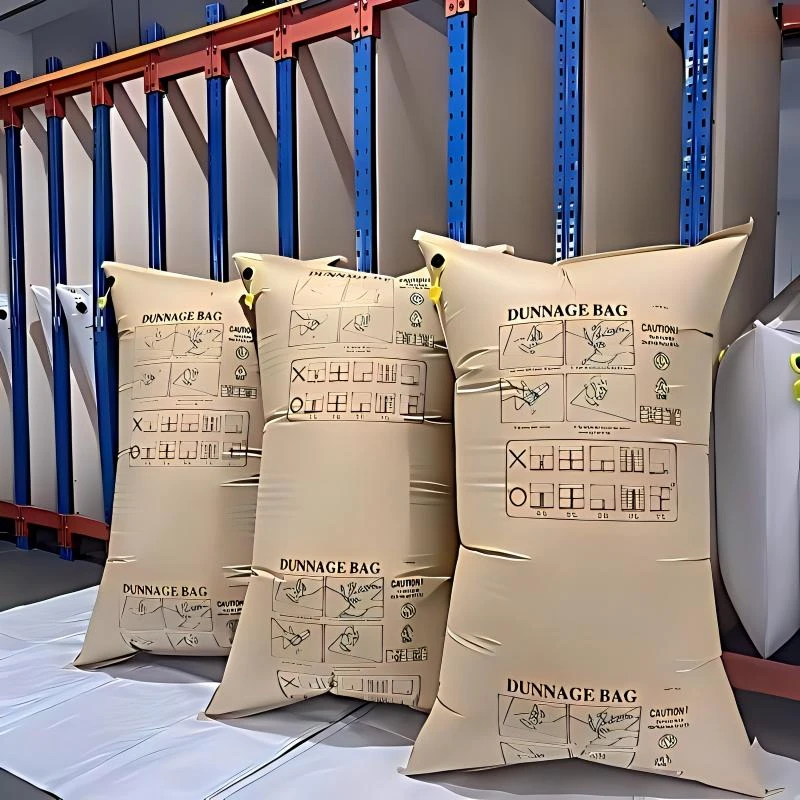
Dunnage air bags, blocking, and lashing may be suitable for controlling movement and filling appropriate voids.
For container door-end protection, a dedicated container door lashing system may be considered where the cargo configuration requires additional restraint at the door end.
The objective is not to sell the strongest strap.
The objective is to create a suitable cargo securing system for the actual load.
Frequently Asked Questions
Is composite strapping as strong as steel strapping?
Composite strapping can provide high tensile strength and is available in multiple strength grades.
However, strength should not be compared only by width or linear breaking strength.
The complete system, including buckle, joint efficiency, tension, securing geometry, and cargo conditions, must be considered.
Can composite strapping replace steel strapping?
In many cargo securing and industrial packaging applications, composite strapping can replace steel strapping.
However, it should not be treated as a universal one-for-one replacement.
The correct choice depends on the application, cargo, transport conditions, required strength, and customer or regulatory requirements.
Does composite strapping rust?
No. Polyester composite strapping itself does not rust because its load-bearing material is polyester rather than steel.
This makes it useful for applications where corrosion or rust staining is a concern.
Can composite strapping be used outdoors?
Yes, composite strapping can be used in outdoor and export environments, but performance depends on the product construction, UV stabilization, exposure duration, temperature, and application conditions.
For long-term outdoor storage, the specific product specification should be checked with the manufacturer.
Why does composite strapping use wire buckles?
Wire buckles provide a friction-based mechanical joint for composite strapping.
They are designed specifically for synthetic strap constructions and allow the strap to be tensioned without the heavy crimping equipment commonly associated with steel strapping.
The buckle must always be matched to the strap width and strength.
Is composite strapping suitable for heavy machinery?
Yes, composite strapping can be used for certain heavy machinery and industrial cargo applications.
However, heavy machinery should not be secured based on strap width alone.
The securing design should consider:
Gross cargo weight
Center of gravity
Cargo geometry
Friction
Lashing angle
Anchor points
Transport mode
Required restraint forces
For particularly heavy or irregular cargo, woven lashing or a combined securing system may be more appropriate.
How to Choose a Composite Strapping Supplier
The strap itself is only one part of the purchasing decision.
When evaluating a supplier, consider:
Product Range
A reliable supplier should be able to provide different widths and strength levels rather than offering only one standard strap.
This allows the securing system to be matched to different cargo requirements.
Matched Buckles and Tools
The supplier should provide compatible:
Wire buckles
Tensioners
Dispensers
Edge protectors
Other accessories
A complete product system makes application and quality control easier.
Testing and Quality Control
Ask for relevant technical data such as:
Linear strength
System strength
Elongation
Strap dimensions
Coil length
Buckle specifications
Test reports
For demanding applications, product testing should be performed using appropriate test methods and representative samples.
Application Support
A good cargo securing supplier should not simply quote a price per roll.
They should understand:
What cargo you are securing
How the cargo is packed
How it is transported
Where the strap is attached
What type of buckle is used
What problems you are experiencing with the current system
This application knowledge is often more valuable than a small difference in unit price.
Tensipack Composite Strapping Solutions
Tensipack supplies composite strapping from 13 mm to 32 mm, together with compatible wire buckles and cargo securing accessories.
Our composite strapping range is designed for applications including:
Industrial cargo securing
Export packaging
Timber bundling
Machinery securing
Metal product bundling
Container cargo securing
Heavy-duty load restraint
Tensipack can also supply complementary cargo securing products, including:
Composite strapping
Woven strapping
Woven lashing
Container lashing systems
Dunnage air bags
Galvanized wire buckles
Metal buckles
Edge protectors
Tensioning tools
This allows customers to source a broader cargo securing package instead of purchasing each component separately.
Conclusion: Composite vs. Steel Is Really a Cargo Securing Decision
The debate between composite strapping and steel strapping should not simply be reduced to plastic versus metal.
The real question is: Which securing system is appropriate for the cargo, transportation conditions, and application?
Steel remains useful in certain demanding applications.
But for many industrial and export cargo applications, polyester composite strapping offers important advantages in handling, corrosion resistance, flexibility, cargo surface protection, and system convenience.
The best solution depends on the complete securing design.
If you are currently using steel strapping and considering a switch to composite strapping, start by evaluating:
Cargo weight and dimensions
Center of gravity
Cargo packaging
Friction conditions
Required restraint direction
Strap strength
Buckle performance
Edge protection
Transport conditions
Application method
Once these factors are understood, it becomes much easier to select the right strap rather than simply selecting the strongest one.
Tensipack provides composite strapping, woven lashing, container lashing, dunnage air bags, buckles, and other cargo securing products for industrial and export applications.
Send us your cargo type, cargo weight, dimensions, packing method, and application photos, and we can help you identify a suitable cargo securing solution.