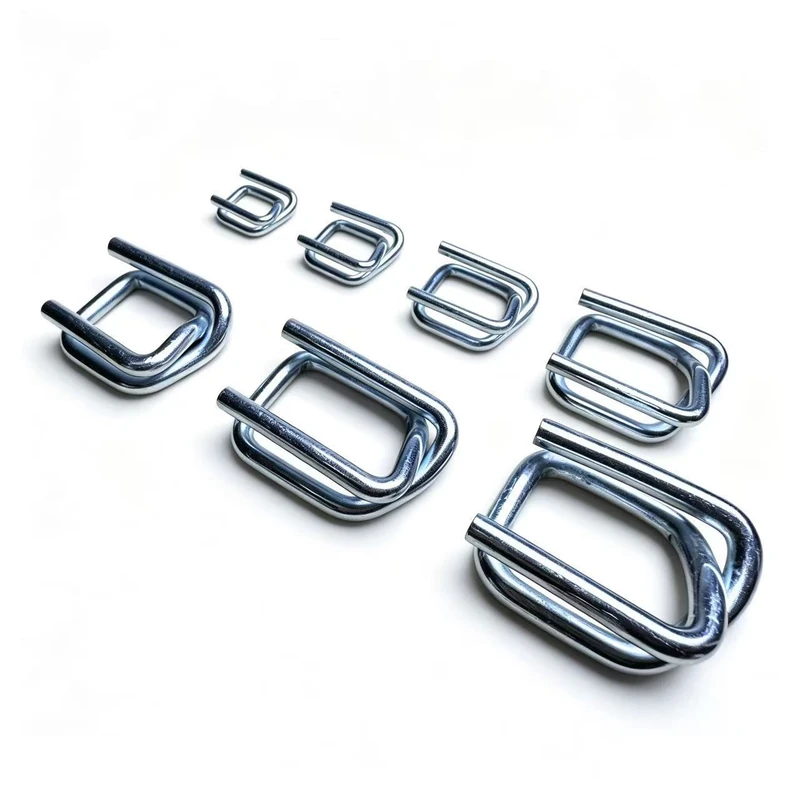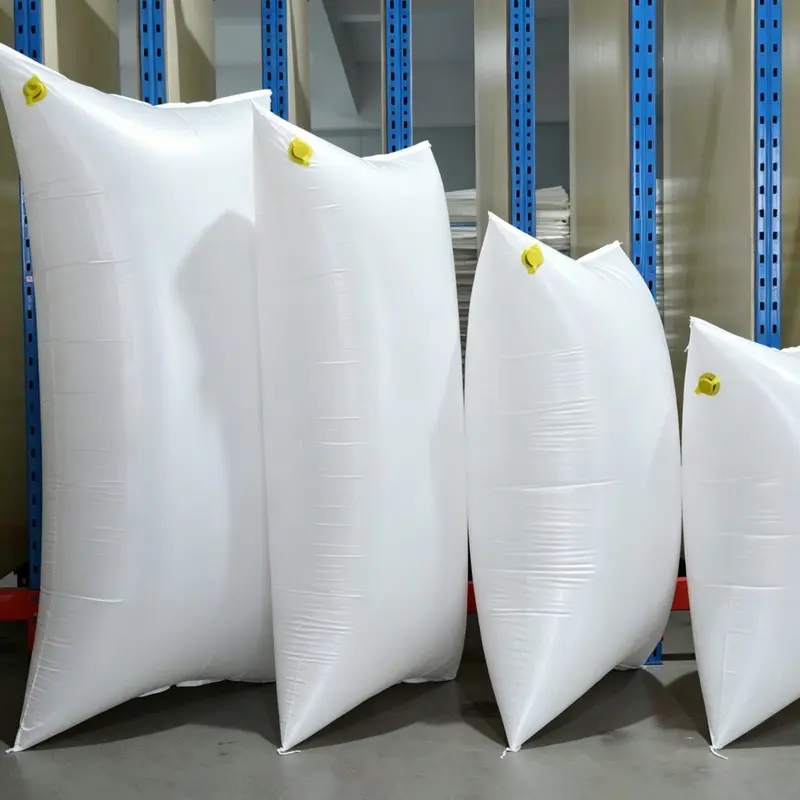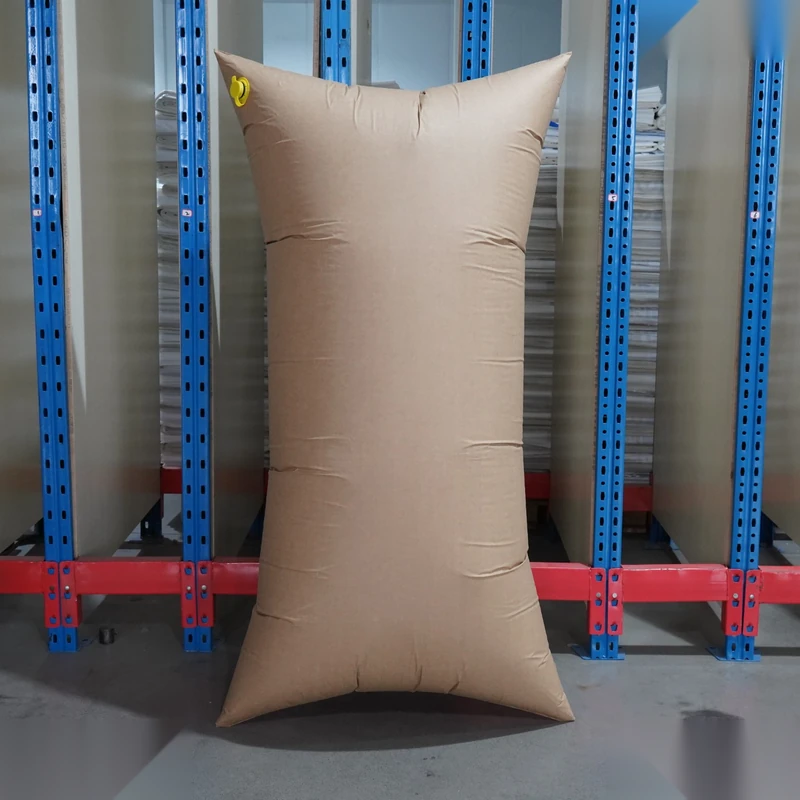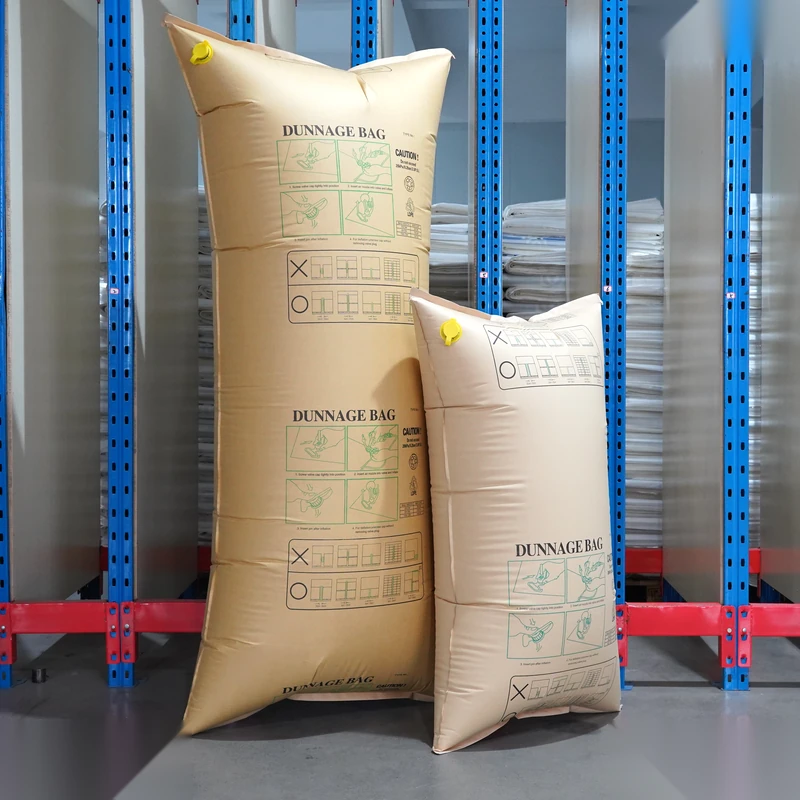
Container cargo can move during transportation due to acceleration, braking, vibration, handling, and vessel movement. When a load has both restraint requirements and empty spaces between cargo units, using composite strapping with dunnage airbags can provide a more complete cargo securing solution.
The two products perform different but complementary functions:
Composite strapping provides restraint, helping hold cargo together or secure it in position.
Dunnage airbags fill suitable voids, reducing the space available for cargo movement.
The key is not simply to use both products, but to understand what movement needs to be controlled and which securing method should perform each function.
This guide explains when to combine composite strapping and dunnage airbags, how to select them, and what to check during installation.
1. How Composite Strapping with Dunnage Airbags Works Together
1.1 Composite Strapping Provides Restraint
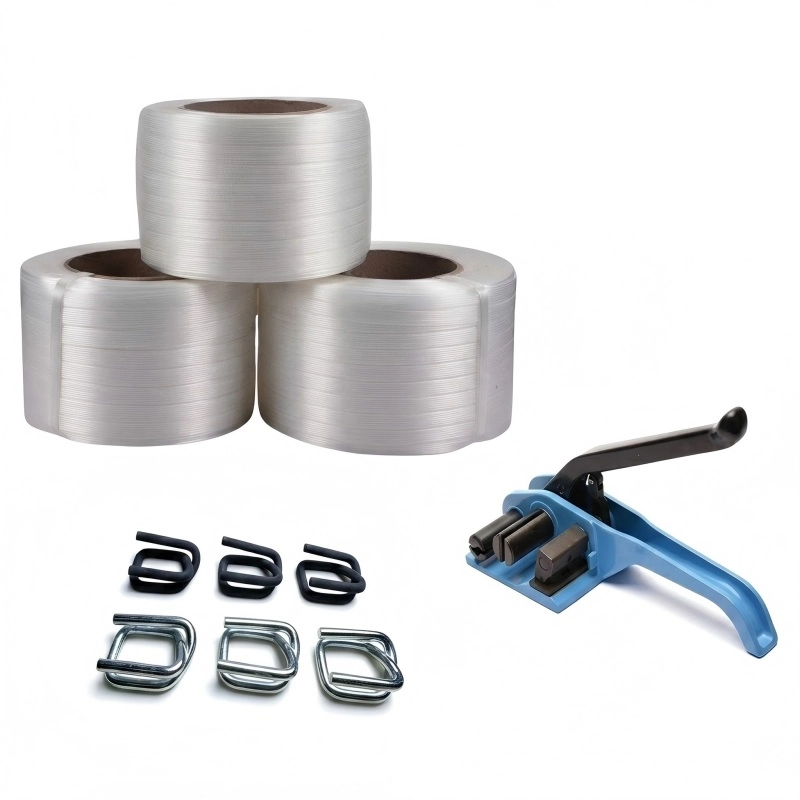
Composite strapping consists of high-tenacity polyester filaments protected by a polymer coating.
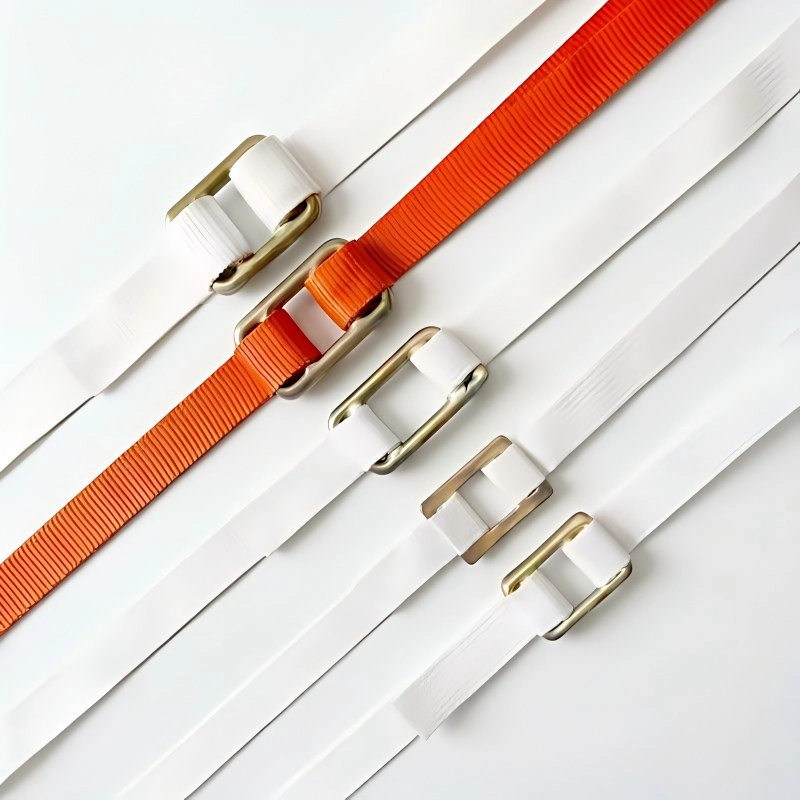
When used with a compatible wire buckle and properly tensioned, it forms a securing system that can help restrain, bundle, or stabilize industrial cargo.
Its performance depends not only on strap width, but also on:
strap strength;
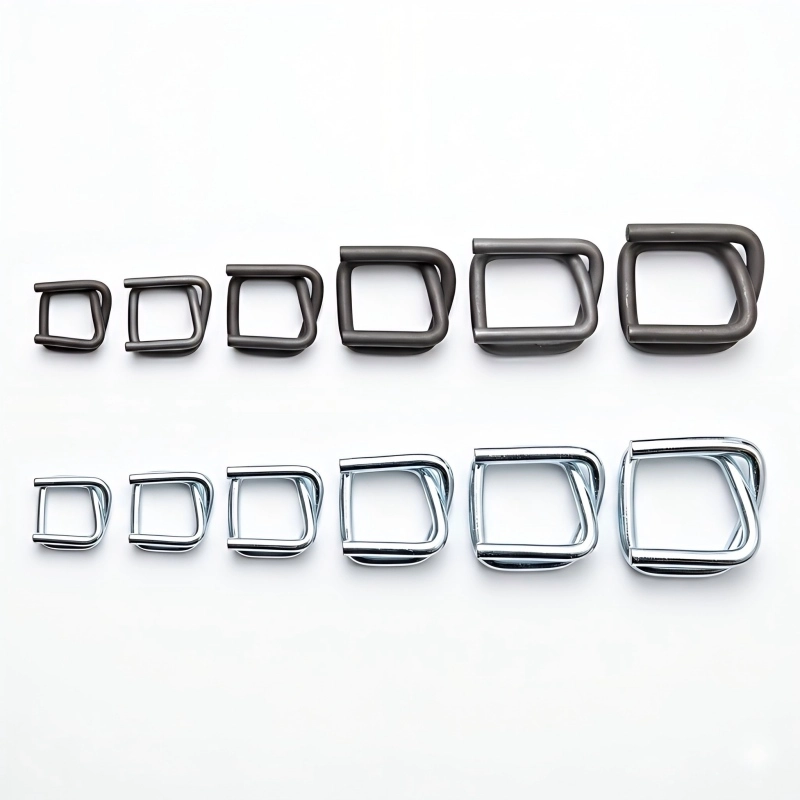
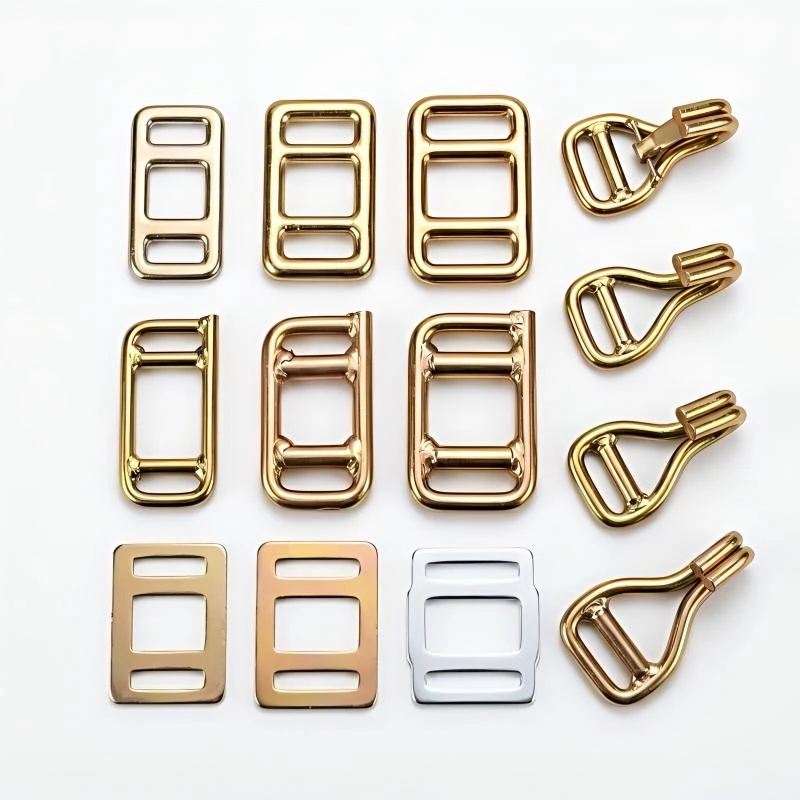
buckle specification;
system strength;
tensioning method;
securing arrangement.
1.2 Dunnage Airbags Fill Voids
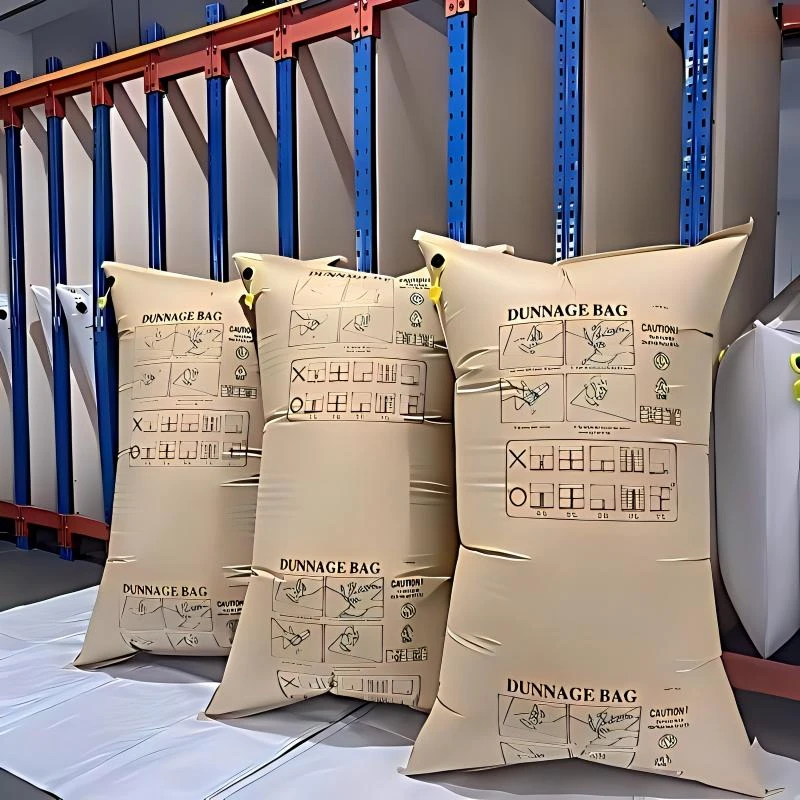
Dunnage airbags are inflatable void fillers positioned in suitable gaps between cargo units or supporting surfaces.
After inflation, they expand against the adjacent cargo faces and help reduce the available space for movement.
Their primary role is therefore void filling and load stabilization, rather than replacing positive restraint where restraint is required.
1.3 Why Combine Them?
The basic principle is simple:
Composite strapping restrains the cargo; dunnage airbags fill suitable voids that could otherwise allow the cargo to move.
For example, strapping may restrain palletized goods or industrial crates, while a dunnage airbag fills a remaining gap between two cargo rows.
2. When Should They Be Used Together?
Not every container requires both products.
The combination is particularly useful when:
palletized cargo has remaining gaps between rows;
irregular cargo cannot be loaded without voids;
cargo requires restraint in addition to void filling;
the loading pattern allows movement in more than one direction.
Filling a gap does not automatically mean the cargo is adequately restrained. Likewise, restraining cargo with strapping does not necessarily eliminate every void.
The complete loading pattern should therefore be evaluated before deciding which securing methods are required.
3. Select the Composite Strapping as a System
Tensipack composite strapping is available from 13 mm to 32 mm, with different strength grades.
| Item Code | Width | Linear Strength | System Strength | Recommended Buckle |
| TS-CS-40L | 13 mm | 200 daN | 320 daN | 13 mm (Ø 3.3 mm) |
| TS-CS-40 | 13 mm | 300 daN | 480 daN | 13 mm (Ø 3.3 mm) |
| TS-CS-50L | 16 mm | 285 daN | 460 daN | 16 mm (Ø 3.5 mm) |
| TS-CS-50 | 16 mm | 425 daN | 680 daN | 16 mm (Ø 3.5 mm) |
| TS-CS-60 | 19 mm | 475 daN | 760 daN | 19 mm (Ø 4.0 mm) |
| TS-CS-65 | 19 mm | 625 daN | 1000 daN | 19 mm (Ø 4.3 mm) |
| TS-CS-85 | 25 mm | 785 daN | 1260 daN | 25 mm (Ø 5.0 mm) |
| TS-CS-86 | 25 mm | 925 daN | 1490 daN | 25 mm (Ø 6.0 mm) |
| TS-CS-105 | 32 mm | 1500 daN | 2400 daN | 32 mm (Ø 7.0 mm) |
This shows why strap width alone is not enough for product selection.
For example, TS-CS-60 and TS-CS-65 are both 19 mm straps, but their strength grades and recommended buckle specifications are different.
System strength is especially important because the buckle connection forms part of the working securing system.
Composite strapping is generally paired with galvanized wire buckles.
For detailed buckle selection, see How to Choose the Right Wire Buckle for Polyester Strapping.
4. Select the Dunnage Airbag According to the Load
Dunnage airbags should not be selected by cargo weight alone.
A more practical selection sequence is:
Void Dimensions → Contact Area → Cargo & Loading Pattern → Transport Conditions → Airbag Size & Level
4.1 Measure the Void
Check the void width, height, available contact area, cargo surfaces, pallet overhang, and any sharp or abrasive points.
The selected airbag should fit the intended void and provide sufficient contact with the adjacent cargo surfaces.
Tensipack dunnage airbags are available in common widths of 60, 90, 120, and 150 cm, with various lengths for different loading configurations.
4.2 Select the Appropriate Airbag Level
For Tensipack PP woven dunnage airbags:
| Level | Max. Filling Pressure | Max. Burst Pressure |
| Level 0 | 2 PSI | 6 PSI |
| Level 1 | 3 PSI | 8 PSI |
| Level 2 | 5.8 PSI | 17 PSI |
| Level 3 | 8.7 PSI | 25 PSI |
| Level 4 | 10 PSI | 30 PSI |
A higher airbag level is not automatically better. Selection should also consider the loading configuration, transport conditions, void dimensions, and supporting surfaces.
Importantly, burst pressure is not the target inflation pressure. Always inflate according to the specified filling pressure for the selected bag.
5. How to Install Composite Strapping and Dunnage Airbags Together
There is no single arrangement suitable for every load, but the following sequence provides a practical framework.
5.1 Position and Inspect the Cargo
Position the pallets, crates, or other cargo according to the loading plan before installing the securing products.
Identify:
where restraint is required;
where suitable voids remain;
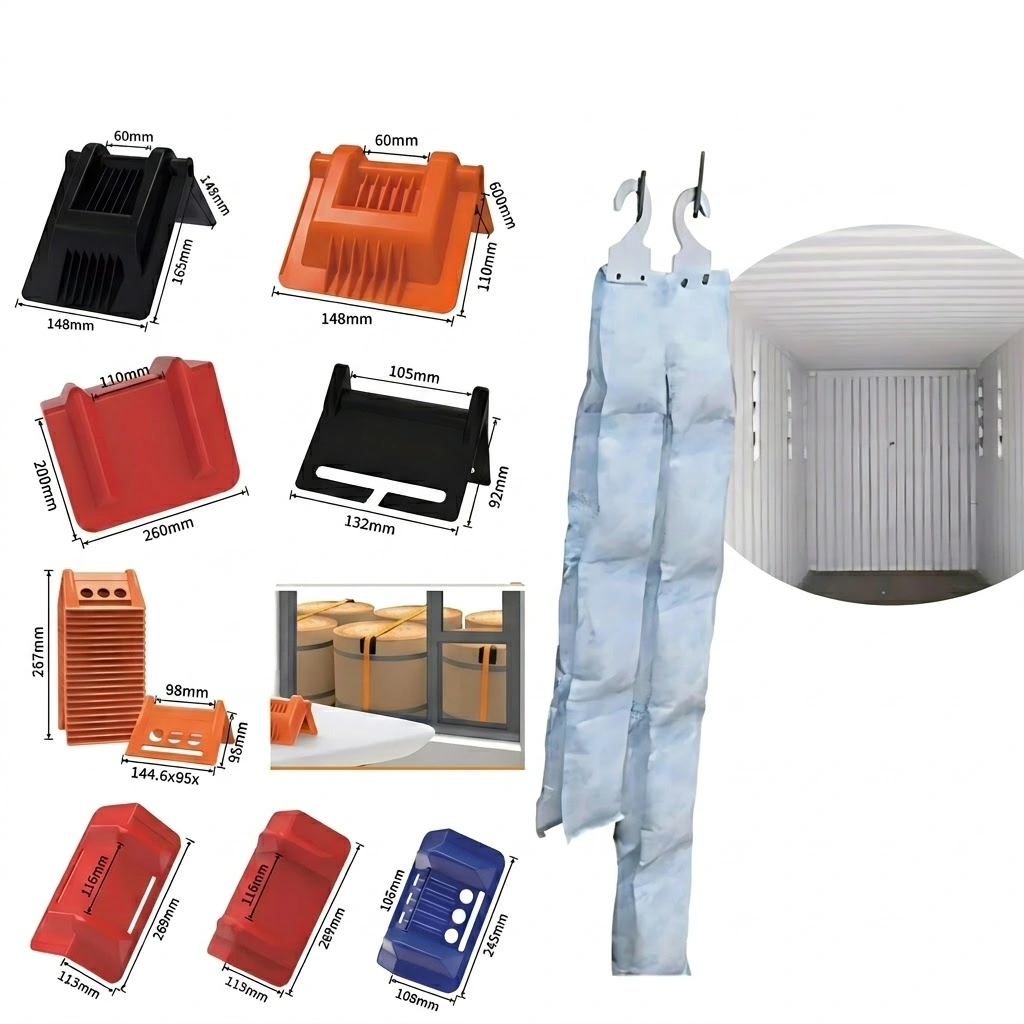
whether sharp or abrasive surfaces require protection.
A dunnage airbag should not be used simply to push incorrectly positioned cargo into place.
5.2 Install the Composite Strapping
Route the composite strapping according to the required restraint arrangement.
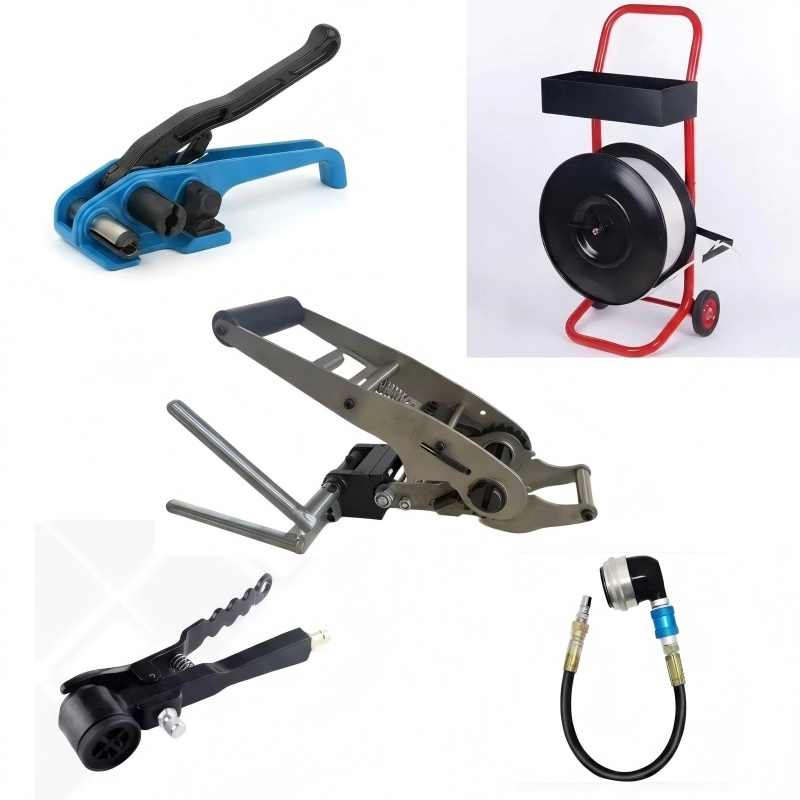
Install the appropriate galvanized wire buckle and tension the strap using a suitable tensioner.
Check that the strap is correctly routed and does not contact unprotected sharp edges.
5.3 Position and Inflate the Dunnage Airbag
Place the uninflated bag into the intended void.
Make sure:
the bag is not twisted;
the valve remains accessible;
sufficient contact area is available;
sharp surfaces are protected.
Connect a compatible dunnage airbag inflator and inflate gradually within the specified filling pressure.
The purpose is to fill the void and stabilize the cargo—not to force the load out of its intended position.
6. Final Inspection Before Closing the Container
After installation, inspect the complete cargo securing arrangement.
For the composite strapping, check the strap specification, buckle, tension, routing, and visible condition.
For the dunnage airbag, check its size, position, inflation, contact area, and surrounding surfaces.
Finally ask:
Can the cargo still move in a direction that has not been adequately controlled?
If so, additional restraint, blocking, bracing, or another appropriate securing method may be required.
7. Example: Composite Strapping with Dunnage Airbags for Palletized Cargo
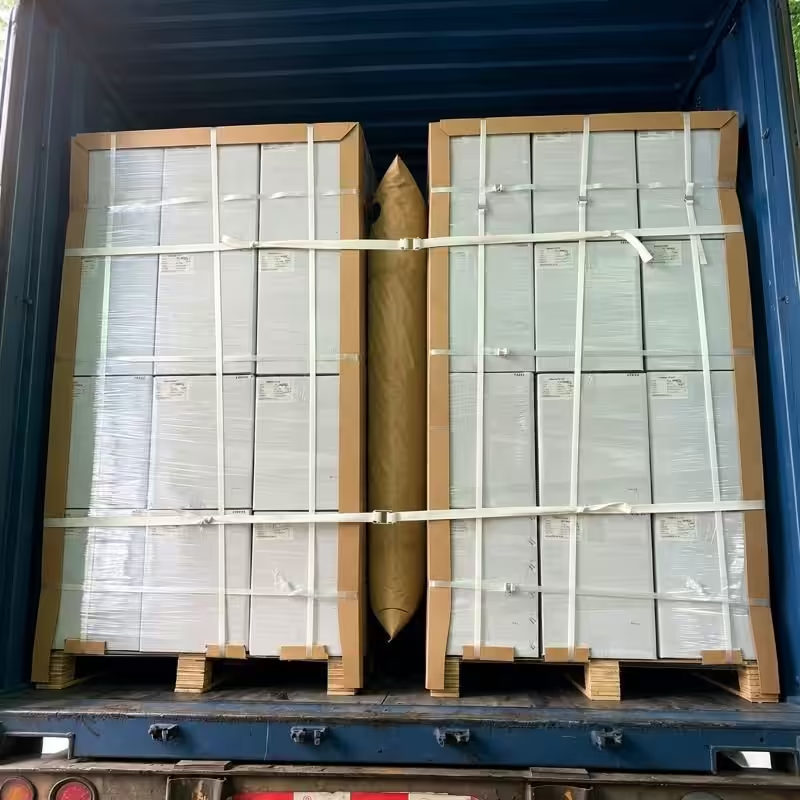
Consider two rows of palletized industrial goods loaded inside a shipping container with a remaining center gap.
A typical process would be:
Position and stabilize the pallets.
Identify the required restraint points.
Select and install the appropriate composite strapping and galvanized wire buckles.
Tension the strapping.
Measure the remaining void.
Select and position the appropriate dunnage airbag.
Protect any sharp contact surfaces.
Inflate the airbag within its specified filling pressure.
Inspect the complete load before closing the container.
In this arrangement:
The strapping provides restraint, while the airbag fills the remaining void.
8. Common Mistakes to Avoid
8.1 Selecting Strapping by Width Only
Straps of the same width may have different strength grades and buckle requirements.
8.2 Selecting an Airbag by Cargo Weight Only
Void dimensions, contact area, transport conditions, and load configuration also matter.
8.3 Overinflating the Airbag
Do not use burst pressure as the working inflation pressure.
8.4 Ignoring Sharp Edges
Protect both strapping and airbags from sharp or abrasive surfaces.
8.5 Assuming an Airbag Replaces Restraint
Void filling and positive restraint perform different functions.
8.6 Treating the Container Door Area as a Normal Void
Cargo immediately behind container doors requires special consideration. If cargo can shift or collapse toward the doors, an appropriate door-end restraint arrangement may be required rather than relying on a standard dunnage airbag alone.
For more information, see How to Prevent Cargo Collapse at Container Doors.
9. Quick Selection Checklist
Check What to Confirm
Cargo Weight, dimensions, stability
Loading Pattern Possible movement directions
Composite Strap Width and strength grade
Wire Buckle Size and wire diameter
System Strength Suitable for securing requirement
Void Dimensions and contact area
Dunnage Airbag Size and level
Filling Pressure Within specification
Contact Surfaces Sharp areas protected
Final Inspection Complete load checked
10. Frequently Asked Questions
10.1 Can Composite Strapping and Dunnage Airbags Be Used Together?
Yes. They can complement each other when the load requires both restraint and void filling.
10.2 Can Dunnage Airbags Replace Composite Strapping?
Not necessarily. Airbags primarily fill voids and stabilize cargo. Positive restraint may still be required depending on the load.
10.3 Is a Higher Airbag Level Always Better?
No. The appropriate level depends on the application, void, cargo configuration, and transport conditions.
10.4 Should I Inflate an Airbag to Its Burst Pressure?
No. Burst pressure is not the normal filling pressure. Always follow the specified filling pressure.
11. Final Recommendation
Using composite strapping with dunnage airbags can provide an effective container cargo securing solution when a load requires both restraint and void filling.
The key principle is:
Composite strapping provides restraint. Dunnage airbags fill suitable voids and help limit cargo movement.
Rather than automatically choosing the strongest strap or highest airbag level, evaluate the complete load:
Cargo → Loading Pattern → Movement Risk → Strap & Buckle System → Void → Airbag Size & Level → Final Inspection
For heavy, irregular, or unusual loads, the complete securing arrangement should be evaluated rather than selecting each component independently.