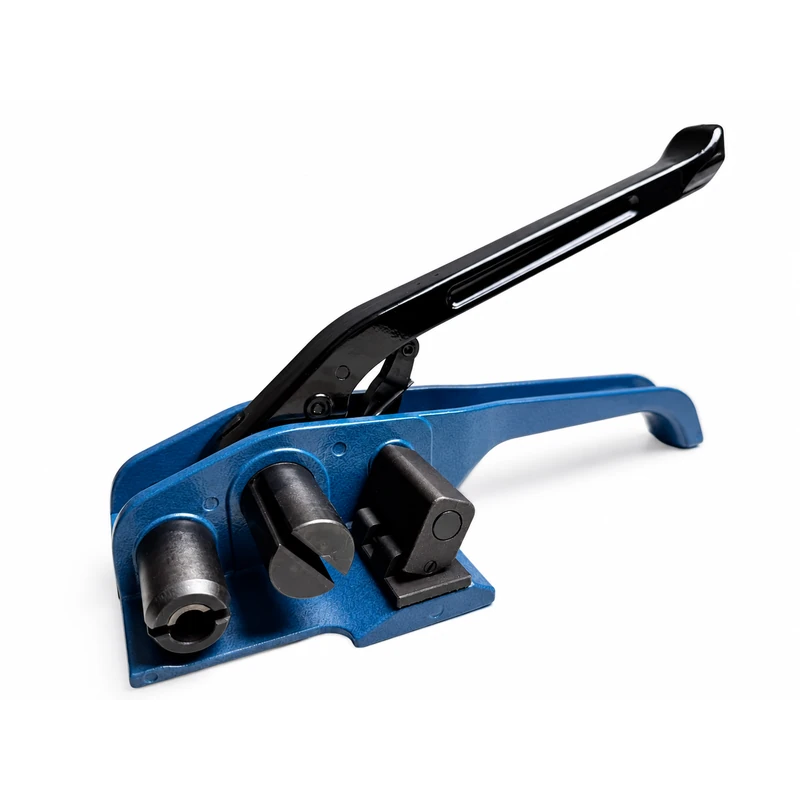
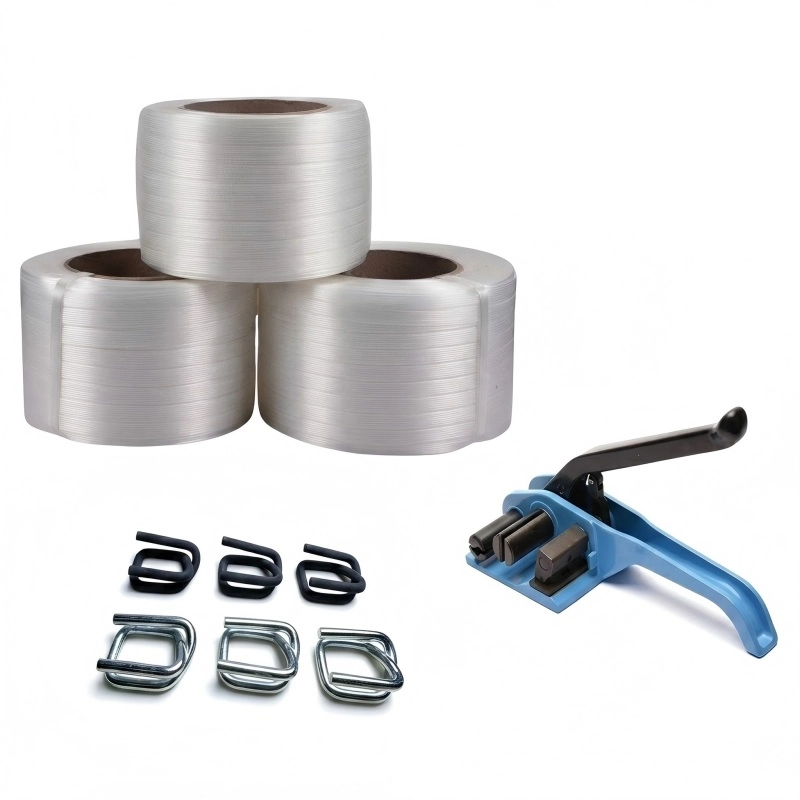
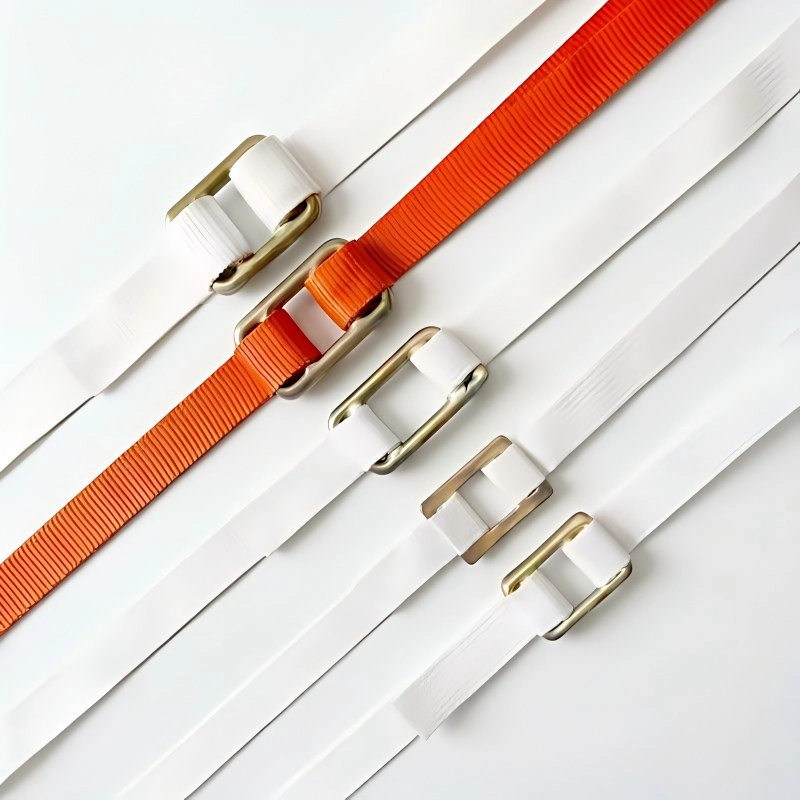
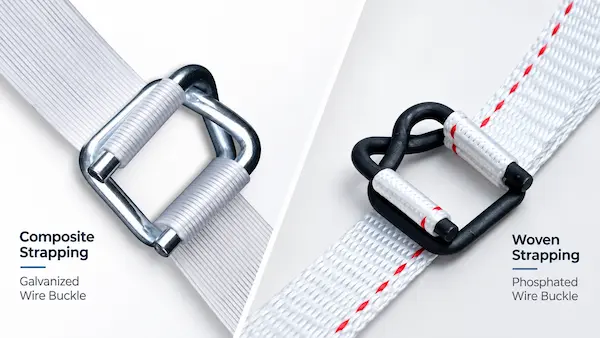
Choosing a strapping wire buckle for polyester strapping may seem simple. If you use a 19 mm strap, choose a 19 mm buckle. If you use a 25 mm strap, choose a 25 mm buckle.
That is a good starting point, but it is not enough.
The right strapping wire buckle is not selected by strap width alone. Two straps can both be 19 mm wide but require different buckle wire diameters because their strength grades are different.
A practical wire buckle selection should consider:
Strapping type — composite or woven
Strap width
Strap strength
Buckle wire diameter
Surface finish
System strength
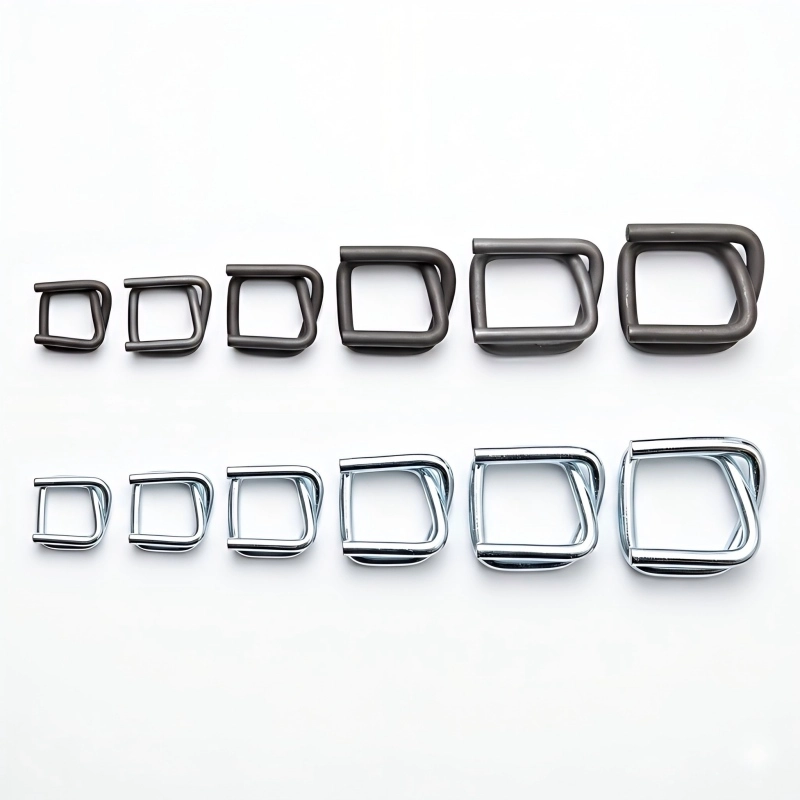
As a general recommendation, galvanized wire buckles are used with composite strapping, while phosphated wire buckles are recommended for woven polyester strapping.
These are recommended standard pairings rather than absolute restrictions. The final goal is to select a buckle that works properly with the particular strap and provides the required system performance.
1. Start with the Strapping Type
Before choosing buckle size or wire diameter, first identify whether you are using composite strapping or woven strapping.
The two types of polyester strapping have different surface structures, which is why different buckle finishes are generally recommended.
1.1 Composite Strapping + Galvanized Wire Buckles
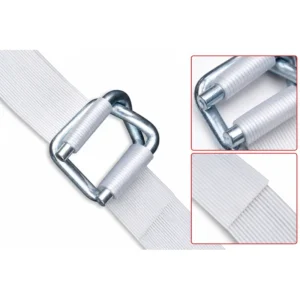
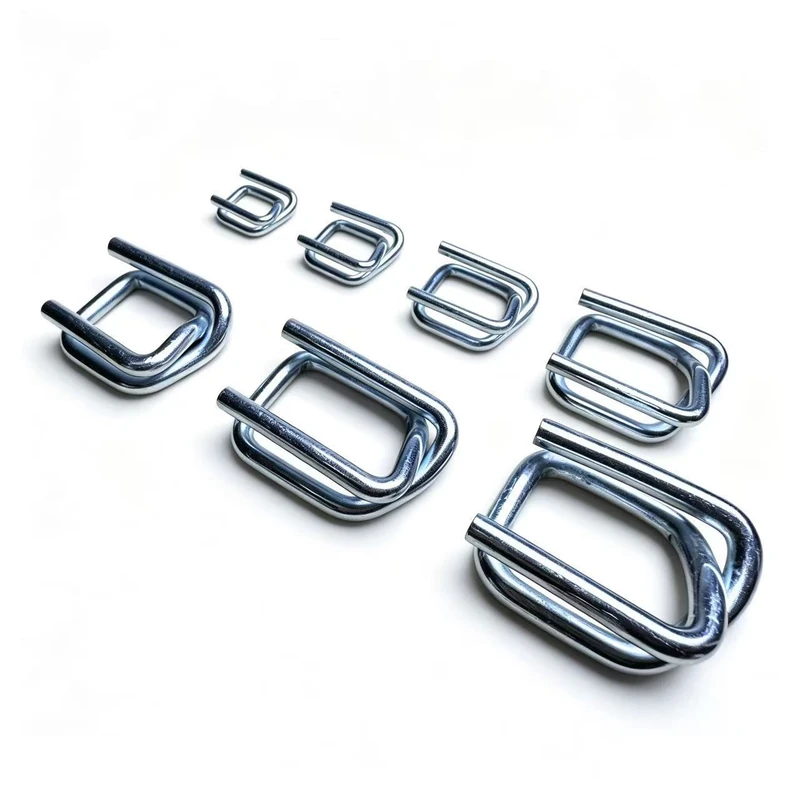
Galvanized wire buckles are generally recommended for composite polyester strapping.
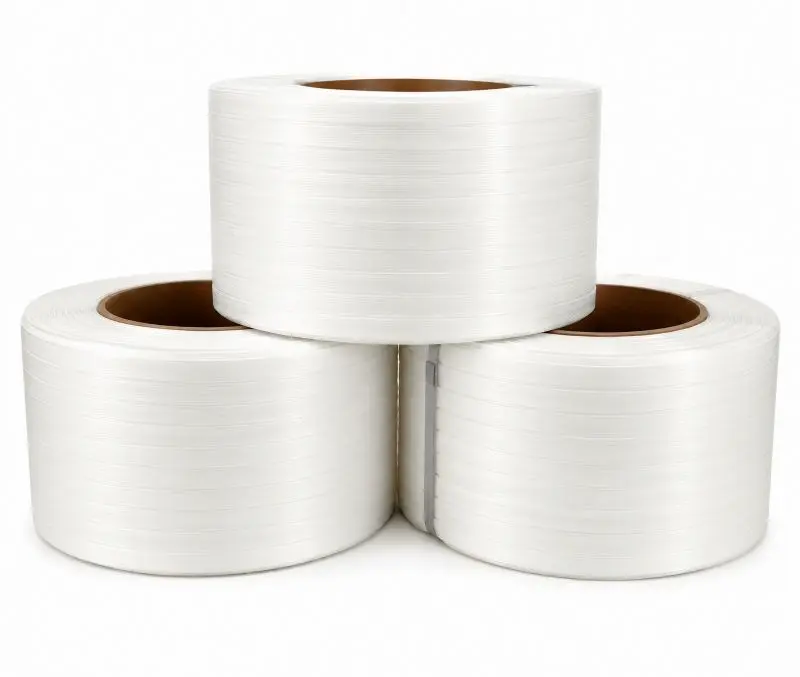
Composite strapping consists of high-tenacity polyester filaments covered by a polymer coating, giving the strap a relatively smooth outer surface.
The relatively smooth surface of a galvanized buckle works well with the coated structure of composite strapping, allowing the strap to move efficiently through the buckle during tensioning while providing reliable holding performance.
The zinc coating also provides good corrosion resistance for industrial packaging, storage and transportation applications.
Tensipack composite strapping is available in 13 mm, 16 mm, 19 mm, 25 mm and 32 mm, with galvanized wire buckles recommended according to the particular strap width and strength grade.
1.2 Woven Strapping + Phosphated Wire Buckles
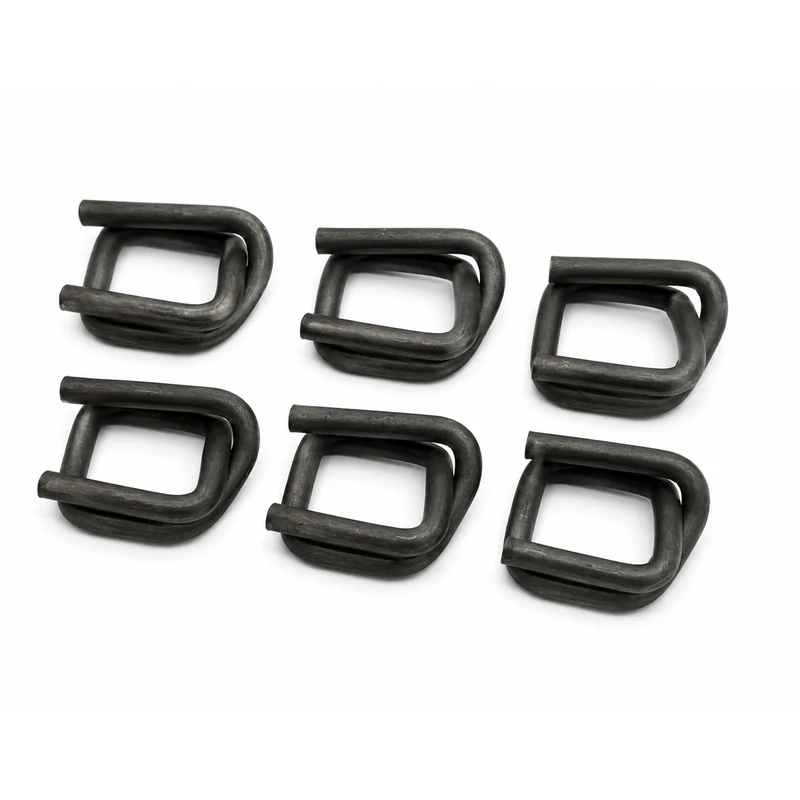
Phosphated wire buckles are generally recommended for woven polyester strapping because their textured surface provides higher friction and helps improve grip under tension.
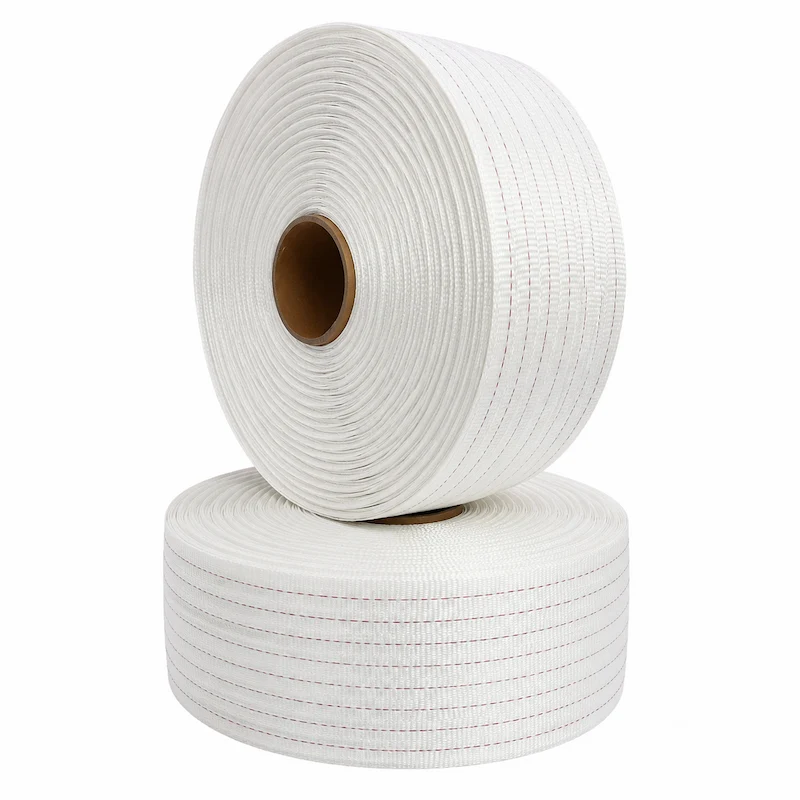
Unlike composite strapping, woven strapping has exposed woven polyester fibers rather than a smooth polymer outer coating.
The rougher surface of a phosphated buckle provides more friction between the buckle and the woven strap, helping maintain grip after tensioning and during transportation.
Tensipack woven strapping is also available in 13 mm, 16 mm, 19 mm, 25 mm and 32 mm, with different strength grades for different cargo securing requirements.
2. Can Galvanized and Phosphated Buckles Be Used Interchangeably?
In some applications, they can.
A phosphated wire buckle may physically work with composite strapping, just as a galvanized wire buckle may be used with woven strapping.
However, physical compatibility does not necessarily mean that different combinations will provide the same grip or system performance.
The surface finish affects the interaction between the strap and buckle. Strap construction, wire diameter, buckle geometry and tensioning can also influence the final result.
For standard Tensipack systems, we generally recommend:
Composite Strapping → Galvanized Wire Buckle
Woven Strapping → Phosphated Wire Buckle
If a different combination is required, it is better to evaluate the actual strap-and-buckle combination rather than assuming that any buckle of the correct width will provide the same performance.
3. Match the Wire Buckle for Polyester Strapping by Width and Type
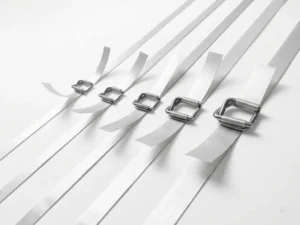
Once you know the strapping type, the next step is to match the nominal width.
The basic rule is straightforward:
13 mm strap → 13 mm buckle
16 mm strap → 16 mm buckle
19 mm strap → 19 mm buckle
25 mm strap → 25 mm buckle
32 mm strap → 32 mm buckle
But this tells you only the nominal buckle size.
It does not always tell you which wire diameter should be used.
To make that decision, you also need to know the strength grade of the strapping.
4. Why Strap Strength Matters When Choosing Wire Diameter
Polyester strapping of the same width can be manufactured in different strength grades.
This is why simply telling a supplier, “I need a buckle for 19 mm strapping,” may not provide enough information.
Two 19 mm straps can have different linear and system strengths, and the recommended buckle specification may also be different.
4.1 Which Buckle Should You Use for 19 mm Composite Strapping?
Consider these two Tensipack 19 mm composite strapping specifications:
Composite Model Linear Strength System Strength Recommended Galvanized Buckle
TS-CS-60 475 daN 760 daN 19 mm × Ø4.0 mm (TS-WB-1940G)
TS-CS-65 625 daN 1,000 daN 19 mm × Ø4.3 mm (TS-WB-1943G)
Both products are 19 mm wide, but they have different strength grades.
The 475 daN grade is matched with an Ø4.0 mm galvanized buckle, while the stronger 625 daN grade is matched with an Ø4.3 mm galvanized buckle.
So instead of asking only:
“Which buckle fits my 19 mm strap?”
A better question is:
“My strap is 19 mm wide with a linear strength of 625 daN. Which buckle should I use?”
That additional strength information makes buckle selection much more accurate.
4.2 Which Buckle Should You Use for 19 mm Woven Strapping?
The same selection principle applies to woven polyester strapping:
Woven Model Linear Strength System Strength Recommended Phosphated Buckle
TS-WS-60 580 daN 900 daN 19 mm × Ø4.0 mm (TS-WB-1940P)
TS-WS-65 750 daN 1,100 daN 19 mm × Ø4.3 mm (TS-WB-1943P)
Again, both straps are 19 mm wide, but the recommended wire diameters are different.
This gives buyers a useful rule to remember:
Strap width determines the nominal buckle size, while strap strength helps determine the appropriate wire diameter.
5. What About 16 mm and 25 mm Strapping?
The same selection principle applies to other widths, but there is an important point:
A higher strap strength does not automatically mean that a thicker wire buckle is required for every strength grade.
For example, Tensipack offers different strength grades of 16 mm composite strapping, while the recommended galvanized buckle may remain 16 mm × Ø3.5 mm.
For 25 mm composite strapping, however, different buckle wire diameters are recommended:
Composite Model Linear Strength System Strength Recommended Galvanized Buckle
TS-CS-85 785 daN 1,260 daN 25 mm × Ø5.0 mm (TS-WB-2550G)
TS-CS-86 925 daN 1,490 daN 25 mm × Ø6.0 mm (TS-WB-2560G)
Therefore, the rule should not be simplified to:
“Stronger strap = thicker buckle.”
Instead, check the recommended buckle specification for the actual strap grade being purchased.
This is especially important when comparing quotations from different suppliers. Two products described simply as “19 mm composite strapping” or “25 mm woven strapping” may have very different strength specifications.
6. Why System Strength Matters
When purchasing polyester strapping, buyers often compare the linear breaking strength first.
That is an important specification, but it does not describe the complete strapping system.
Once the strap is secured with a wire buckle, the performance depends on the combination:
Polyester Strap + Wire Buckle + Correct Threading + Tensioning = Strapping System
System performance can be influenced by strap construction and linear strength, buckle size and wire diameter, buckle geometry, surface finish, steel wire quality, and correct threading and tensioning.
This is why Tensipack specifies both linear strength and system strength for polyester strapping.
For example, TS-CS-65 has a linear strength of 625 daN and a system strength of 1,000 daN when paired with the recommended Ø4.3 mm galvanized buckle.
So when comparing strapping products, buyers should not ask only:
“What is the breaking strength of the strap?”
It is also useful to ask:
“Which buckle is recommended for this strap, and what is the system strength of the combination?”
This provides a better basis for comparing complete strapping solutions rather than comparing the strap alone.
7. Does Wire Buckle Quality Matter?
Yes.
Two wire buckles with the same nominal width and wire diameter may not provide identical performance.
Buckle geometry, steel wire quality, surface treatment and manufacturing consistency can all influence how the buckle behaves under tension.
A well-formed buckle should maintain its shape and allow the strap to sit correctly during tensioning. The surface treatment should also be consistent so that the buckle interacts reliably with the strapping.
This is why buyers should consider more than:
Width + Wire Diameter + Price
A low-priced 19 mm × Ø4.3 mm buckle is not automatically equivalent to another 19 mm × Ø4.3 mm buckle.
For demanding applications, the performance of the complete strap-and-buckle combination is more meaningful than buckle dimensions alone.
8. Galvanized vs Phosphated Wire Buckles: Quick Comparison
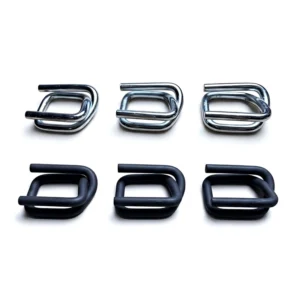
Feature Galvanized Wire Buckle Phosphated Wire Buckle
Generally Recommended For Composite Strapping Woven Strapping
Surface Relatively smooth zinc coating Rougher textured phosphate finish
Main Characteristic Smooth tensioning and corrosion resistance Higher friction and improved grip
Common Widths 13 / 16 / 19 / 25 / 32 mm 13 / 16 / 19 / 25 / 32 mm
Selection Basis Width + strength grade + system performance Width + strength grade + system performance
These are recommended standard pairings rather than absolute restrictions.
For special requirements, the actual strap-and-buckle combination should be considered.
9. Common Mistakes When Choosing Wire Buckles
9.1 Choosing by Width Only
Matching the buckle width is necessary, but it is only the first step.
For example, knowing that your strap is 19 mm does not automatically tell you whether Ø4.0 mm or Ø4.3 mm wire is the better match.
Always check the actual strap strength grade as well.
9.2 Assuming the Thickest Buckle Is Always Better
A heavier-gauge buckle is not automatically the best choice.
The objective is to match the buckle to the particular strap strength grade and system requirement rather than simply selecting the thickest wire available.
9.3 Ignoring the Surface Finish
Galvanized and phosphated buckles have different surface characteristics.
For standard applications, Tensipack generally recommends galvanized wire buckles for composite strapping and phosphated wire buckles for woven strapping.
9.4 Comparing Only the Strap Breaking Strength
The strap is only one component of the complete system.
When comparing suppliers, also check the recommended buckle specification and system strength rather than comparing only the linear breaking strength of the strap.
10. How to Choose the Right Wire Buckle in 4 Steps
For buyers, wire buckle selection can be simplified into four steps.
10.1 Identify the Strapping Type
Determine whether you are purchasing composite or woven polyester strapping.
This helps identify the generally recommended buckle finish: galvanized for composite strapping and phosphated for woven strapping.
10.2 Confirm the Strap Width
Match the nominal strap width with the corresponding buckle size:
13 / 16 / 19 / 25 / 32 mm
A 19 mm strap normally requires a 19 mm buckle, while a 25 mm strap requires a 25 mm buckle.
10.3 Check the Strap Strength
Do not stop at the width.
Check the linear strength of the actual strap specification and then select the recommended buckle wire diameter for that strength grade.
For example, two 19 mm straps may require Ø4.0 mm and Ø4.3 mm buckles respectively.
10.4 Check the System Strength
For heavy-duty cargo securing, consider the performance of the complete strap-and-buckle combination.
A simple selection sequence is:
Strap Type → Strap Width → Strap Strength → Recommended Buckle → System Strength
11. Frequently Asked Questions
11.1 What Buckle Should I Use for 19 mm Composite Strapping?
It depends on the strap strength.
For example, Tensipack TS-CS-60 at 475/760 daN is recommended with a 19 mm × Ø4.0 mm galvanized buckle (TS-WB-1940G).
TS-CS-65 at 625/1,000 daN is recommended with a 19 mm × Ø4.3 mm galvanized buckle (TS-WB-1943G).
11.2 What Buckle Should I Use for 19 mm Woven Strapping?
For Tensipack woven strapping, 580/900 daN is matched with a 19 mm × Ø4.0 mm phosphated buckle (TS-WB-1940P), while 750/1,100 daN is matched with a 19 mm × Ø4.3 mm phosphated buckle (TS-WB-1943P).
11.3 Can I Use a Phosphated Buckle with Composite Strapping?
Yes, it may be possible in some applications.
However, Tensipack generally recommends galvanized wire buckles as the standard pairing for composite strapping.
If another combination is required, the actual strap-and-buckle system performance should be considered.
11.4 Is a Thicker Wire Buckle Always Better?
Not necessarily.
The buckle should be matched to the particular strap strength grade and required system performance. A thicker buckle is not automatically necessary for every stronger strap.
12. Final Recommendation
Choosing the right wire buckle for polyester strapping involves more than matching a 19 mm strap with a 19 mm buckle.
For a more accurate selection, follow this sequence:
Strap Type → Strap Width → Strap Strength → Recommended Buckle → System Strength
For standard Tensipack systems, galvanized wire buckles are generally recommended for composite strapping, while phosphated wire buckles are generally recommended for woven polyester strapping.
Most importantly, if the same strap width is available in several strength grades, check the recommended buckle specification for the actual grade you are purchasing.
If you are unsure which wire buckle to choose, send us your strapping type, width, linear strength and application. Tensipack can recommend a suitable strap-and-buckle combination for your cargo securing requirements.