A 19 mm composite strapping may have a linear breaking strength of 625 daN and a system strength of 1,000 daN.
Why are these two numbers different?
The answer is simple: they are not measuring the same thing.
Linear breaking strength measures the strength of the composite strapping itself. System strength measures the performance of a defined composite strapping and wire buckle combination in a loop configuration.
Understanding this difference is important when comparing composite strapping specifications. Two straps with the same width may have different linear strengths, and two systems using the same strap width may also have different system strengths.
What Is Linear Breaking Strength?
Linear breaking strength is the tensile strength of a single length of composite strapping.
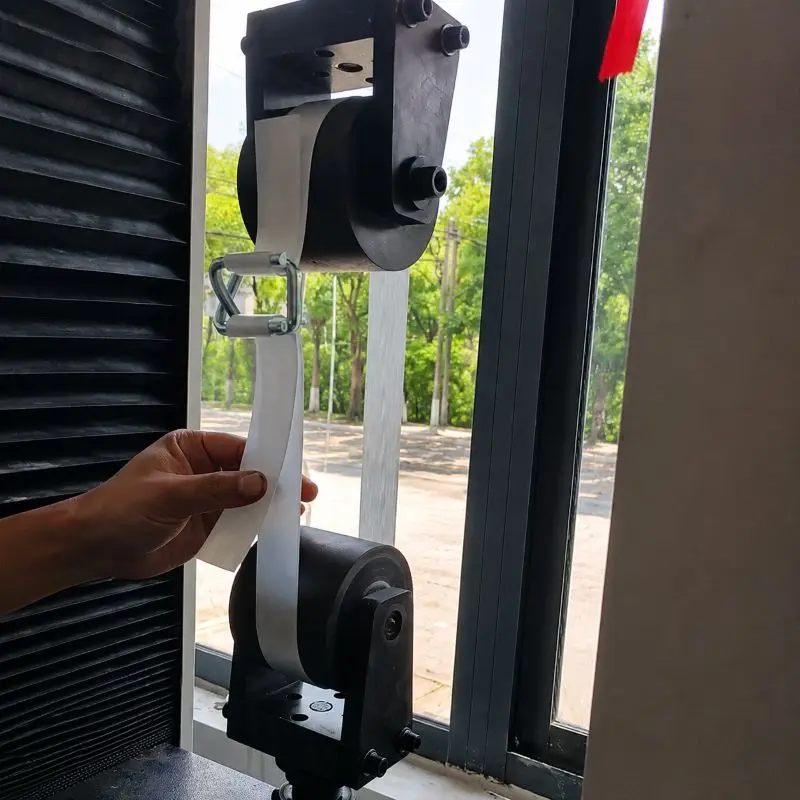
During a linear strength test, a straight sample of the strap is secured in a tensile testing machine and pulled until failure. The maximum force reached is recorded as the linear breaking strength.
For example:
TS-CS-65 Composite Strapping
Width: 19 mm
Linear Breaking Strength: 625 daN
The 625 daN value describes the strength of the strap itself under the specified test conditions.
Linear strength is useful when comparing different grades of composite strapping. However, it does not describe the performance of the complete strap-and-buckle connection.
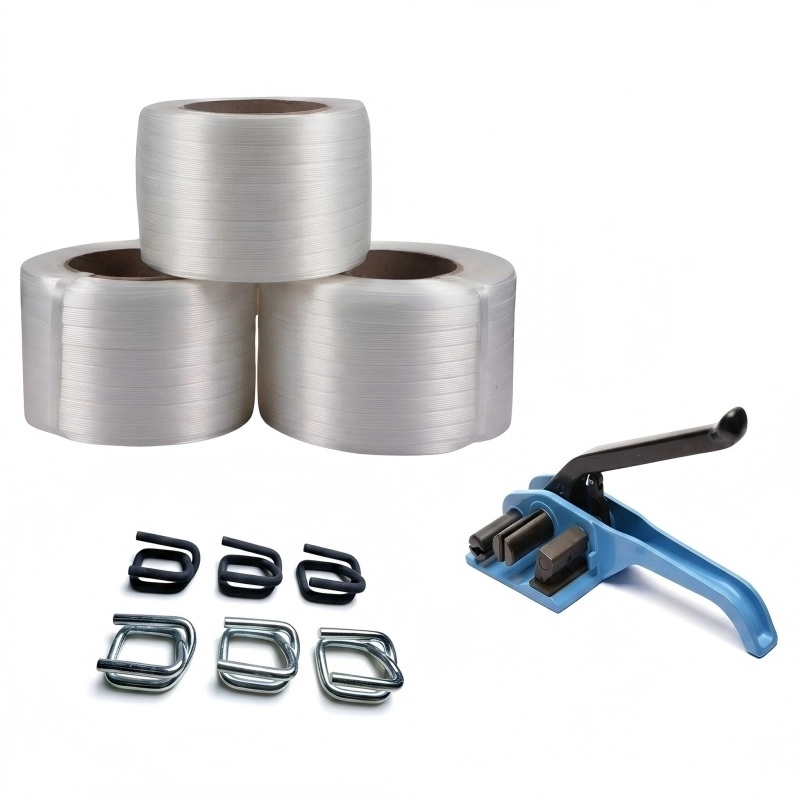
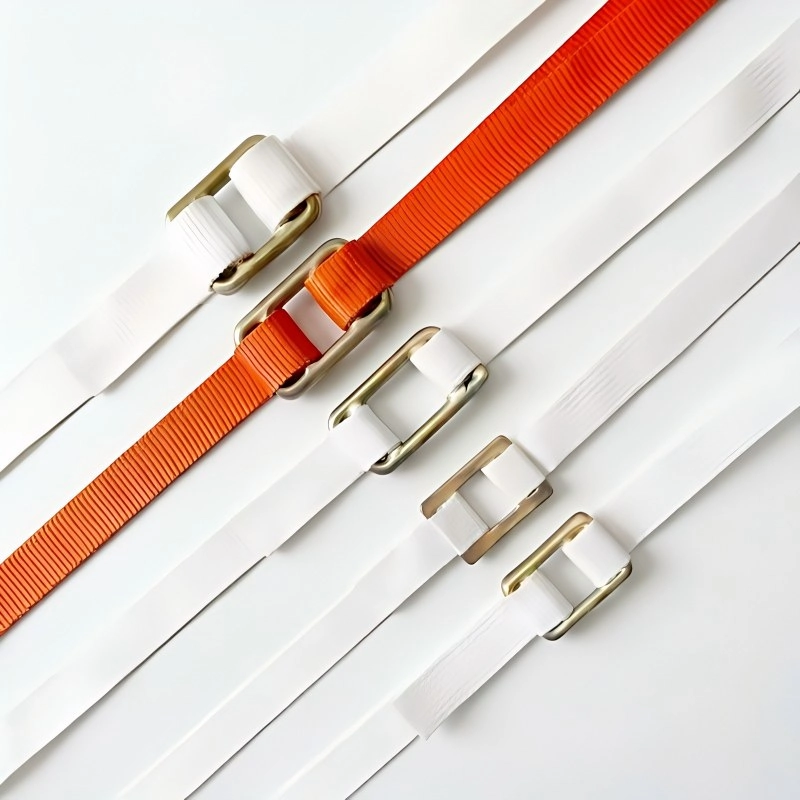
In actual use, composite strapping is normally applied around a pallet, bundle, crate or other load and connected with a wire buckle. This creates a different configuration from a straight linear-strength test.

What Is System Strength?
System strength, or system breaking strength, measures the strength of a complete loop of composite strapping connected with a specified wire buckle.
Unlike a linear-strength test, a system-strength test does not evaluate the strap alone. It evaluates how the strap and buckle perform together as a system.
For example:
TS-CS-65 Composite Strapping
Width: 19 mm
Linear Strength: 625 daN
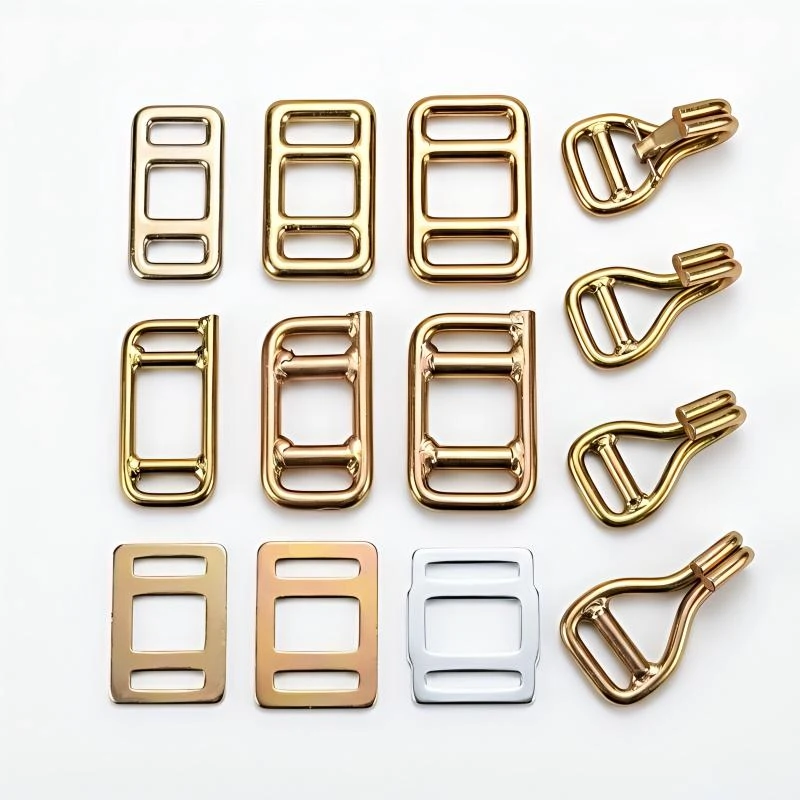
Recommended Buckle: 19 mm × Ø4.3 mm Galvanized Wire Buckle
System Strength: 1,000 daN
The 1,000 daN value does not mean that the individual strap has become stronger.
It means that the test configuration is different.
A useful distinction is:
Linear strength describes the strap itself.
System strength describes the tested strap-and-buckle combination.
This distinction is important because composite strapping is normally used with a wire buckle in actual packaging and cargo securing applications.
Why Can System Strength Be Higher Than Linear Strength?
This is one of the most common points of confusion when reading composite strapping specifications.
Linear strength is measured on a single section of composite strapping.
System strength is measured with the strap formed into a closed loop and connected with a wire buckle. In this configuration, two sections of strapping carry the applied load.
The final breaking strength of the system then depends on how effectively the buckle joint transfers that load.
This is why a composite strap with a linear strength of 625 daN can have a tested system strength of 1,000 daN when used with its specified wire buckle.
The 1,000 daN value is a tested system specification—not simply a calculated multiple of 625 daN.
Fixed multipliers are sometimes used to explain the relationship between linear strength and system strength. They can help illustrate the basic principle of a loop system, but they should not be used to assign the rated system strength of a composite strapping product.
The actual system strength should be verified using the specified composite strap and buckle combination.
What Is Joint Efficiency?
Joint efficiency describes how effectively the connection between the composite strap and wire buckle transfers load through the complete system.
In a loop system, the connection is a critical part of the load path.
As load increases, the composite strap engages with the wire buckle through contact, friction and the geometry of the buckle. The performance of this connection influences the breaking strength of the complete system.
Joint performance can vary depending on factors such as:
composite strap construction and strength grade;
buckle width;
buckle wire diameter;
buckle geometry;
buckle manufacturing consistency;
compatibility between the strap and buckle.
This is why joint efficiency is useful for understanding system performance, but it should not be treated as one fixed percentage that applies to every composite strapping system.
For a buyer, the more useful question is not:
“What joint-efficiency percentage do you assume?”
but:
“What system strength was achieved with this specific strap and buckle combination?”
That value provides a more meaningful basis for evaluating the tested system.
Why Does the Wire Buckle Matter?
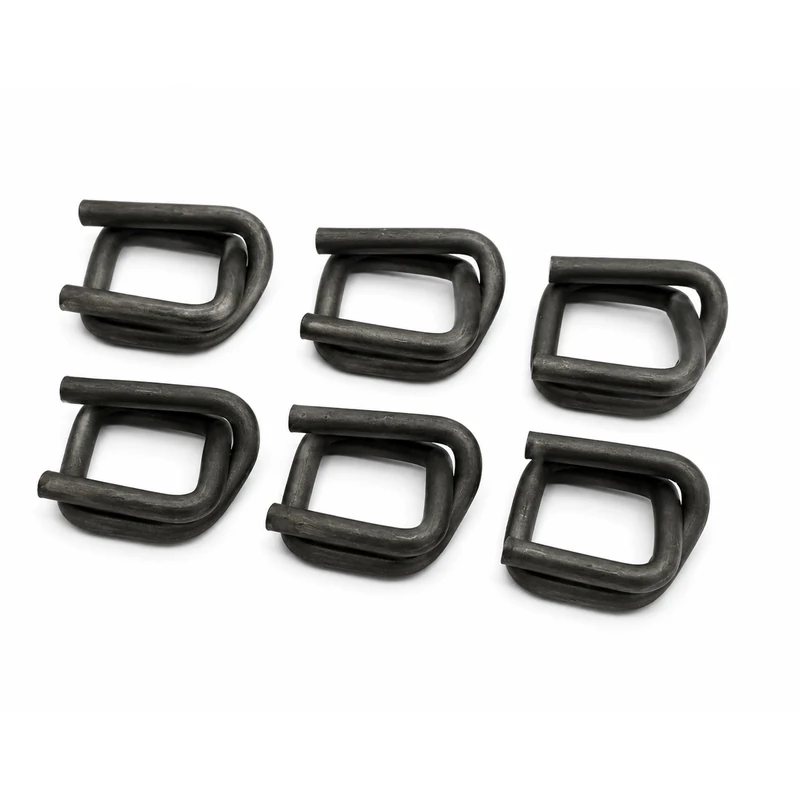
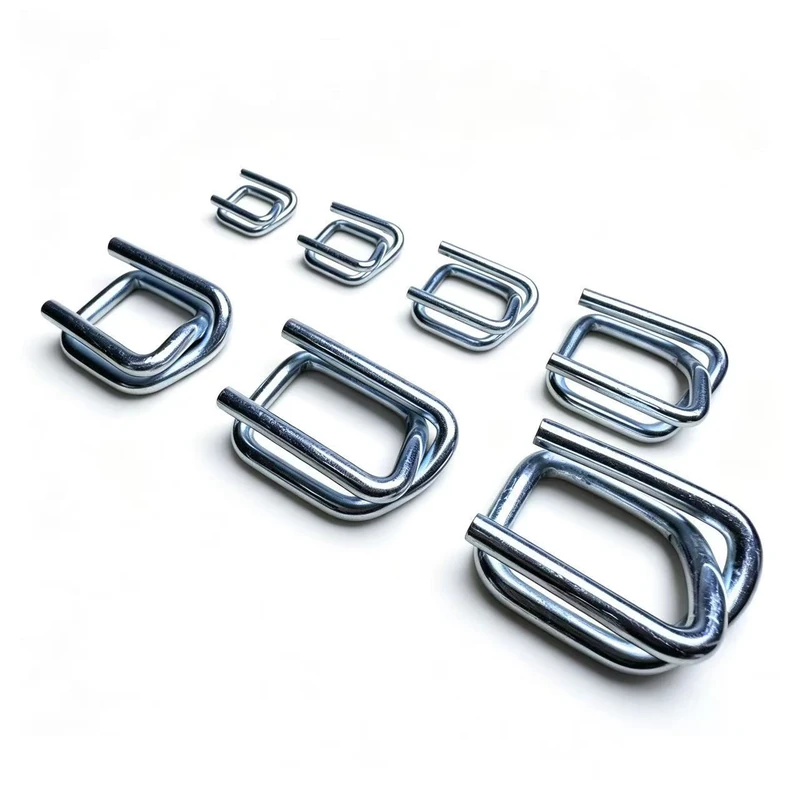
The wire buckle is not simply an accessory added after the strap has been selected. It is part of the composite strapping system.
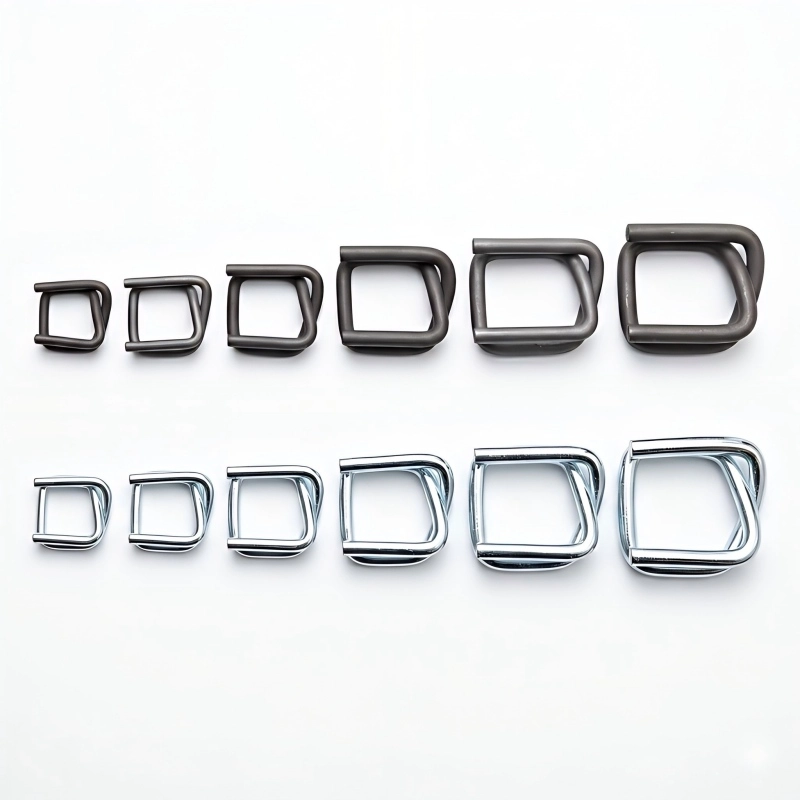
Its dimensions and construction affect how the strap engages with the buckle and how load is transferred through the joint.
Important buckle parameters include:
buckle width;
wire diameter;
buckle geometry;
wire quality;
manufacturing consistency.
For this reason, specifying only:
19 mm composite strapping
does not completely define the system.
A more useful specification is:
19 mm composite strapping, 625 daN linear strength, matched with a 19 mm × Ø4.3 mm galvanized wire buckle, with a system strength of 1,000 daN.
This identifies both the strap grade and the buckle used for the specified system performance.
For more information about buckle selection, see How to Choose the Right Wire Buckle for Polyester Strapping.
The Same Strap Width Does Not Always Mean the Same Strength
One of the easiest mistakes to make when comparing composite strapping is to compare products by width alone.
For example, Tensipack TS-CS-60 and TS-CS-65 are both 19 mm composite strapping, but they are different strength grades:
Item Code Width Linear Strength System Strength Recommended Galvanized Buckle
TS-CS-60 19 mm 475 daN 760 daN 19 mm (Ø4.0)
TS-CS-65 19 mm 625 daN 1,000 daN 19 mm (Ø4.3)
Both straps have the same nominal width.
But their linear strengths are different, their tested system strengths are different, and the recommended buckle wire diameters are also different.
This is why buckle selection should not be based on strap width alone.
The buckle should be matched to the specific strap grade and tested system specification.
The same principle applies when comparing quotations from different suppliers.
A quotation for “19 mm composite strapping” does not provide enough information to determine whether two products are equivalent.
Tensipack Composite Strapping: Linear and System Strength Comparison
The following specifications show why width, linear strength, buckle selection and system strength should be considered together.
Item Code Width Linear Strength System Strength Recommended Galvanized Buckle
TS-CS-40L 13 mm 200 daN 320 daN 13 mm (Ø3.3)
TS-CS-40 13 mm 300 daN 480 daN 13 mm (Ø3.3)
TS-CS-50L 16 mm 285 daN 460 daN 16 mm (Ø3.5)
TS-CS-50 16 mm 425 daN 680 daN 16 mm (Ø3.5)
TS-CS-60 19 mm 475 daN 760 daN 19 mm (Ø4.0)
TS-CS-65 19 mm 625 daN 1,000 daN 19 mm (Ø4.3)
TS-CS-85 25 mm 785 daN 1,260 daN 25 mm (Ø5.0)
TS-CS-86 25 mm 925 daN 1,490 daN 25 mm (Ø6.0)
TS-CS-105 32 mm 1,500 daN 2,400 daN 32 mm (Ø7.0)
There are two important points in this table.
First, the same strap width can be available in more than one strength grade.
Second, the recommended buckle specification can change as the strap strength increases, even when the nominal strap width remains the same.
For example:
TS-CS-60: 19 mm / 475 daN linear / 760 daN system / Ø4.0 mm buckle
TS-CS-65: 19 mm / 625 daN linear / 1,000 daN system / Ø4.3 mm buckle
This is why a meaningful product comparison should consider:
Strap Width + Linear Strength + Matched Buckle + System Strength
rather than width alone.
Linear Strength vs. System Strength: Which One Should Buyers Compare?
Both matter, but they answer different questions.
Linear strength is useful for comparing the tensile strength of different composite strap grades.
System strength is more relevant when evaluating the complete strap-and-buckle combination. It should be considered together with the buckle specification used for the test.
For buyers, the key is not to choose one number and ignore the other, but to understand what each value represents and whether the compared products use equivalent specifications.
How Is Composite Strapping Strength Tested?
Linear strength and system strength require different test configurations.
Linear Strength Test
A straight sample of composite strapping is loaded in a tensile testing machine until failure. The maximum force reached is recorded as the linear breaking strength.
System Strength Test
The composite strap is connected with its specified wire buckle to form a loop. The complete assembly is then loaded until failure, and the maximum force reached is recorded as the system strength.
When reviewing system-strength data, check that the test identifies the strap specification, buckle specification and recorded breaking load. This makes the result traceable to an actual strap-and-buckle combination rather than just a number on a data sheet.
Tested System Strength and Actual Application Are Not the Same Thing
A laboratory system-strength result describes the breaking performance of a specified strap-and-buckle combination under defined test conditions.
Actual performance on a load also depends on correct application.
For example:
the strap must be threaded correctly through the buckle;
excess slack should be removed before final tensioning;
the tensioner should be positioned correctly;
damaged strapping should not be used;
sharp or abrasive cargo edges should be considered.
These factors do not redefine the tested system-strength value. They affect how effectively the specified system is applied in practice.
A correctly specified composite strapping system still needs to be correctly installed.
If you are experiencing strap slippage, tension loss or breakage, see our Composite Strapping Troubleshooting Guide.
For the complete application procedure, see How to Use Polyester Composite Cord Strapping: A Step-by-Step Guide.
What Should Buyers Check When Comparing Composite Strapping?
If two quotations appear to offer similar composite strapping, first check whether the specifications are actually equivalent.
Instead of asking only:
“What is the breaking strength?”
check:
What is the linear breaking strength?
What is the tested system strength?
Which wire buckle was used for the system test?
What is the buckle wire diameter?
Is the system strength based on the exact strap-and-buckle combination being supplied?
Is corresponding test data available for the required specification?
A 19 mm composite strap from Supplier A should not automatically be considered equivalent to a 19 mm strap from Supplier B.
The width may be identical while the strap grade, linear strength, buckle specification and system strength are different.
Compare the complete system specification.
Frequently Asked Questions
Is Linear Breaking Strength the Same as System Strength?
No.
Linear breaking strength measures the tensile strength of a single length of composite strapping.
System strength measures the breaking strength of a specified composite strap and wire buckle combination in a loop configuration.
They are different test results and should not be used interchangeably.
Can I Calculate System Strength from Linear Strength?
A theoretical relationship between linear strength, the two sections of strap in a loop and joint efficiency can help explain how a strapping system works.
However, a fixed multiplier should not be used to assign the rated system strength of a composite strapping product.
The system-strength value should be based on the tested strap-and-buckle combination.
Can Two 19 mm Composite Straps Have Different Strengths?
Yes.
Strap width does not determine strength by itself.
Two 19 mm composite straps can have different linear strengths, recommended buckle specifications and system strengths.
Does a Thicker Wire Buckle Always Mean Higher System Strength?
Not automatically.
Wire diameter is an important buckle parameter, but system performance also depends on buckle geometry, manufacturing consistency, strap specification and compatibility between the strap and buckle.
The correct buckle is the one matched and verified for the particular composite strapping grade.
The Key Point
When comparing composite strapping, do not compare products by width or a single breaking-strength figure alone.
Check the complete specification:
Strap Width + Linear Strength + Matched Buckle + Tested System Strength
This provides a much clearer basis for determining whether two composite strapping systems are actually equivalent.